Invisible spores, visible strain: Indoor mold as a neglected determinant of mental health
DOI:
https://doi.org/10.14295/bjs.v6i3.956Keywords:
mold exposure, damp housing, neuroinflammation, depression, indoor environmentAbstract
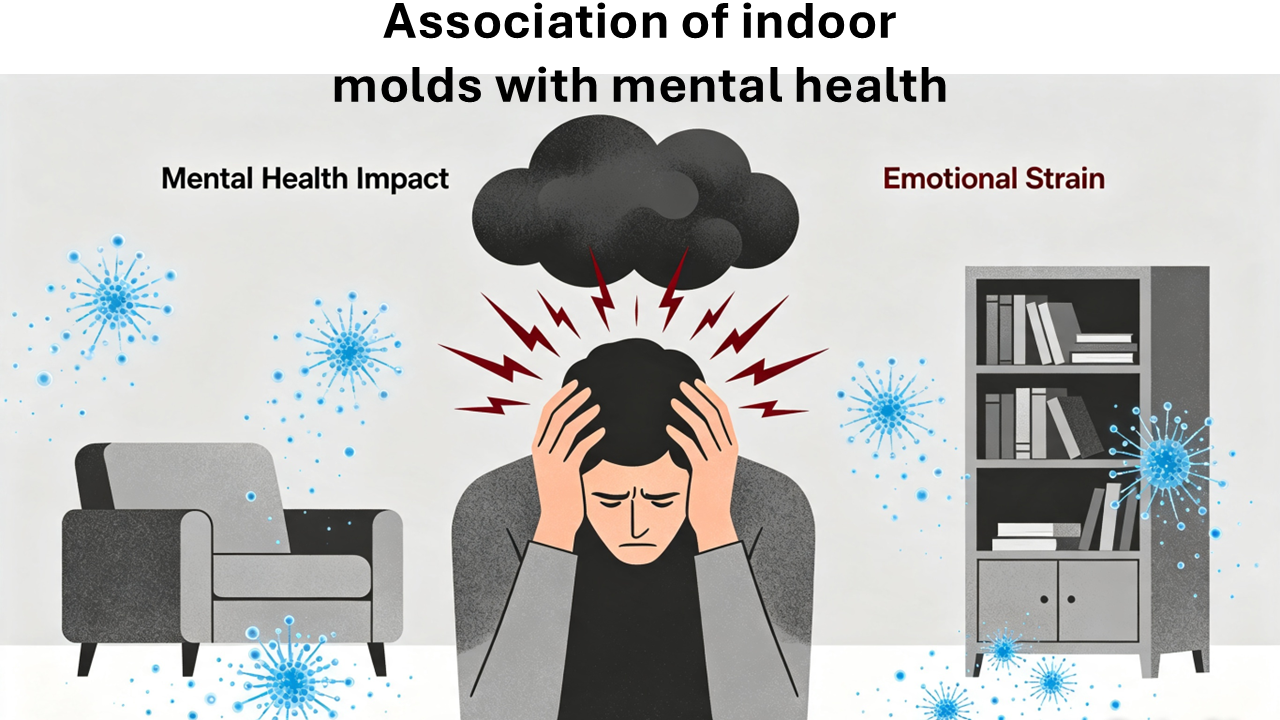
Indoor mold exposure is an underrecognized environmental determinant of mental health. While the respiratory impacts of mold have long been established, its subtle neuropsychological consequences are increasingly drawing attention. Evidence from Europe, North America, and emerging African studies indicates that chronic exposure to damp, mold-infested dwellings may elevate risks of depression, anxiety, cognitive dysfunction, and sleep disturbance. These outcomes are often exacerbated by socioeconomic stressors and inadequate housing infrastructure, which are common in tropical and low-income settings. This short communication explores current evidence, underlying mechanisms, and illustrative global cases, including observations from humid African regions, to highlight the mental-health burden of mold exposure. Addressing the “invisible spores” that silently undermine psychological resilience demands an integrated housing, environmental, and mental-health response.
References
Abimbola, & Olubunmi, K. (2023). Environmental factors associated with atopic dermatitis among children aged 6 to 14 years in Alimosho Local Government, Lagos, Nigeria. University of Johannesburg (South Africa) , Lagos, Nigeria. Accessed on: Dec. 25, 2025. Available on: https://www.proquest.com/openview/f41aecc4b223f606cb0e060c66a03f4a/1?cbl=2026366&diss=y&pq-origsite=gscholar
Abdi-Dehkordi, M., Bozorg-Haddad, O., Salavitabar, A., & Goharian, E. (2021). Developing a sustainability assessment framework for integrated management of water resources systems using distributed zoning and system dynamics approaches. Environment, Development and Sustainability, 23(11), 16246-16282. https://doi.org/10.1007/s10668-021-01340-0
Adams, T. N., Redlich, C. A., Glazer, C. S., & Gulati, M. (2025). Hypersensitivity pneumonitis associated with home mold exposure: A retrospective cohort analysis. PLOS One, 20(5). https://doi.org/10.1371/journal.pone.0323093
Aleem, A. (2021). Evaluation of the correlation of residential houses rising dampness and food contamination: A case study of Iseyin local government area, Oyo state. Accessed on: Oct. 20, 2025. Available on: https://search.proquest.com/openview/29cd9fb2d923f1775959f047ab0a5a61/1?pq-origsite=gscholar&cbl=2026366&diss=y
Bakare, T. (2025). Effect of dampness on the well-being of gidan kwano residents. Accessed on: Oct. 20, 2025. Available on: https://www.academia.edu/download/97889265/My_Complete_Work_pdf_signed.pdf
Bastos, L. M. V., Viana, L. M. C., Peixoto, M. C. B. G., Pimentel, I. D. S., Figueirêdo, L. R. B., Jereissati, L. O., Lima, L. M. F. V., Aguiar, A. B., & Santos, J. C. C. (2023). Sleep loss causes emotional dysregulations increasing depression and anxiety: a reciprocal relationship. Brazilian Journal of Health Review, 6(4), 16367-16382. https://doi.org/10.34119/bjhrv6n4-185
Besnier, E., Thomson, K., Stonkute, D., Mohammad, T., Akhter, N., Todd, A., Jensen, M. R., Kilvik, A., & Bambra, C. (2021). Which public health interventions are effective in reducing morbidity, mortality and health inequalities from infectious diseases amongst children in low- and middle-income countries (LMICs): An umbrella review. PLoS One, 16(6), e0251905. https://doi.org/10.1371/journal.pone.0251905
Borchers, A. T., Chang, C., & Eric Gershwin, M. (2017). Mold and human health: A reality check. Clinical Reviews in Allergy & Immunology, 52(3), 305-322. https://doi.org/10.1007/s12016-017-8601-z
Busolo, W. S. W., & Njabira, V. I. (2022). Air quality. The Palgrave Handbook of Urban Development Planning in Africa, 327-372, Chapter. https://doi.org/10.1007/978-3-031-06089-2_12
Carlos, W. G., Dela Cruz, C., Jamil, S., Kipen, H., & Rose, C. (2017). Mold-specific concerns associated with water damage for those with allergies, asthma, and other lung diseases – ProQuest. American Journal of Respiratory and Critical Care Medicine, 196(7), 13-14.
Colizzi, M., Lasalvia, A., & Ruggeri, M. (2020). Prevention and early intervention in youth mental health: Is it time for a multidisciplinary and trans-diagnostic model for care? International Journal of Mental Health Systems, 14(1). https://doi.org/10.1186/s13033-020-00356-9
Coulburn, L., & Miller, W. (2022). Prevalence, risk factors and impacts related to mould-affected housing: An Australian integrative review. International Journal of Environmental Research and Public Health, 19(3), 1854. https://doi.org/10.3390/ijerph19031854
Dicker, D., Nguyen, G., & Abate, D. (2018). Global, regional, and national age-sex-specific mortality and life expectancy, 1950-2017: A systematic analysis for the Global Burden of Disease Study 2017. The Lancet, 392(10159), 1684-1735. DOI: 10.1016/S0140-6736(18)31891-9.
Ehsanifar, M., Rajati, R., Gholami, A., & Reiss, J. P. (2023). Mold and mycotoxin exposure and brain disorders. Journal of Integrative Neuroscience, 22(6), 137. https://doi.org/10.31083/j.jin2206137
Felger, J. C. (2017). Imaging the role of inflammation in mood and anxiety-related disorders. Current Neuropharmacology, 16(5), 533-558. https://doi.org/10.2174/1570159X15666171123201142
Fisk, W. J., Eliseeva, E. A., & Mendell, M. J. (2010). Association of residential dampness and mold with respiratory tract infections and bronchitis: a meta-analysis. Environmental Health, 9(1), 72. https://doi.org/10.1186/1476-069x-9-72
Furber, G., Segal, L., Leach, M., Turnbull, C., Procter, N., Diamond, M., Miller, S., & McGorry, P. (2015). Preventing mental illness: Closing the evidence-practice gap through workforce and services planning. BMC Health Services Research, 15(1), 283. https://doi.org/10.1186/s12913-015-0954-5
Gatto, M. R., Mansour, A., Li, A., & Bentley, R. ( 2024). A State-of-the-science review of the effect of damp- and mold-affected housing on mental health. Environmental Health Perspectives, 132(8), 086001. https://doi.org/10.1289/ehp14341
Gauvin, K. (2025). Mycotoxin and mold-related illness: Healthcare experiences and subjective implications on biopsychosocial functioning. Accessed on: Oct. 20, 2025. Available on: https://search.proquest.com/openview/b8d2e8879cf044b014cff31d7889cc07/1?pq-origsite=gscholar&cbl=18750&diss=y
Genuis, S. J., Sears, M. E., Schwalfenberg, G., Hope, J., & Bernhoft, R. (2025). The Scientific World Journal: Clinical Detoxification: Elimination of persistent toxicants from the human body. The Scientific World Journal, 13. http://dx.org/10.1155/2013/23847
Harding, C. F., Liao, D., Persaud, R., DeStefano, R. A., Page, K. G., Stalbow, L. L., Roa, T., Ford, J. C., Goman, K. D., & Pytte, C. L. (2023). Differential effects of exposure to toxic or nontoxic mold spores on brain inflammation and Morris water maze performance. Behavioural Brain Research, 442, 114294. https://doi.org/10.1016/j.bbr.2023.114294
Howden-Chapman, P., Fyfe, C., Nathan, K., Keall, M., & Pierse, N. (2021). The effects of housing on health and well-being in Aotearoa New Zealand. New Zealand Population Review, 47, 16-32.
Johnny, E. (2025). Prevalence and correlates of psychiatric morbidity among adolescents in Bo, Sierra Leone. African Digital Health Repository Project.
Juma, K., Wekesah, F. M., Kabiru, C. W., & Izugbara, C. O. (2020). Burden, drivers, and impacts of poor mental health in young people of West and Central Africa: Implications for research and programming. West African Youth Challenges and Opportunity Pathways, 233-265, Chapter 11. https://doi.org/10.1007/978-3-030-21092-2_11
Manson, K., & Knight, J. (2025). Sierra Leone, 4th ed. Buckinghamshire: The Globe Requot Inc, 2025. Accessed on: Dec. 26, 2025. Available on: https://books.google.com.ng/books?hl=en&lr=&id=KhN4EQAAQBAJ&oi=fnd&pg=PR8&dq=Damp+Homes+in+Tropical+Bo+City,+Sierra+Leone&ots=WLlVPCW_R5&sig=uDME1cJO5yRMRmi7OLSV3W-BdEM&redir_esc=y#v=onepage&q&f=false
McDonnell, J., & Aronica, M. (2022). Molds and respiratory disease. Lung Health and the Exposome, 37-49, Chapter. https://doi.org/10.1007/978-3-030-90185-1_3
Mendell, M. J., Mirer, A. G., Cheung, K., Tong, M., & Douwes, J. (2011). Respiratory and allergic health effects of dampness, mold, and dampness-related agents: a review of the epidemiologic evidence. Environmental Health Perspectives, 119(6), 748-756. https://doi.org/10.1289/ehp.1002410
Mendell, M. J., & Adams, R. I. (2022). Does evidence support measuring spore counts to identify dampness or mold in buildings? A literature review. Journal of Exposure Science & Environmental Epidemiology, 32, 177-187. https://doi.org/10.1038/s41370-021-00377-7
Murray, C. J. L., Callender, C. S. K. H., & Wyper, G. M. A. (2018). Population and fertility by age and sex for 195 countries and territories, 1950–2017: a systematic analysis for the Global Burden of Disease Study 2017. The Lancet, 392(10159), 1995-2051. DOI: 10.1016/S0140-6736(18)32278-5
Moss, M. (2025). Novel applications for bioaerosol classification: An in-depth analysis using a wideband integrated bioaerosol sensor. Accessed on: Oct. 20, 2025. Available on: https://search.proquest.com/openview/6677bde67b2a19647fd3f212e0c02968/1?pq-origsite=gscholar&cbl=2026366&diss=y
Ishizawa, O. A., Bonnafous, L., Gaspari, M., Giron Gordillo, A., Muñoz Díaz, J., Pomonis, A., & Wandel, N. (2020). Disaster Risk Management Diagnostic Note Sierra Leone,” 1818 H Street NW, Washington, DC 20433. Accessed on: Dec. 26, 2025. Available on: https://documents1.worldbank.org/curated/en/728231623317357684/pdf/Sierra-Leone-Disaster-Risk-Management-Diagnostic-Note.pdf
Ratnaseelan, A. M., Tsilioni, I., & Theoharides, T. C. (2018). Effects of mycotoxins on neuropsychiatric symptoms and immune processes. Clinical Therapeutics, 40(6), 903-917. https://doi.org/10.1016/j.clinthera.2018.05.004
Riemann, D., Baglioni, C., Gjerstad, M., Hertenstein, E., Leger, D., Parrino, L., Paunio, T., Deleanu, O-C., Strazisar, B., & Spiegelhalder, K. (2017). European guideline for the diagnosis and treatment of insomnia. Journal of Sleep Research, 26(6), 675-700. https://doi.org/10.1111/jsr.12594
Shenassa, E. D., Daskalakis, C., Liebhaber, A., Braubach, M., & Brown, M. J. (2007). Dampness and mold in the home and depression: an examination of mold-related illness and perceived control of one’s home as possible depression pathways. American Journal of Public Health, 97(10), 1893-1899. https://doi.org/10.2105/AJPH.2006.093773
Sheehan, M. C. (2024). Natural hazards and public health in urban areas. In: Oxford Research Encyclopedia of Natural Hazard Science. https://doi.org/10.1093/acrefore/9780199389407.013.435
Sovacool, B. K. (2025). Confronting a “silent killer”: reducing vulnerability to extreme heat in urban West Africa with surface cooling technology and climate-resilient roofing. Climatic Change, 178. https://doi.org/10.1007/s10584-025-04061-9
Vaid, U., & Evans, G. W. (2017). Housing quality and health: An evaluation of slum rehabilitation in India. Environmental and Behaviour, 49(7), 771-790. https://doi.org/10.1177/0013916516667975
Wang, Q., Guo, Y., Wu, X., Pan, Z., Pan, S., Xu, S., Zhou, Q., Qian, J., & Li, L. (2022). Effect of allergic rhinitis on sleep in children and the risk factors of an indoor environment. Sleep and Breathing, 26(3), 1265-1275. https://doi.org/10.1007/s11325-021-02546-2
Wang, J., Janson, C., Lindberg, E., Holm, M., Gislason, T., Benediktsdóttir, B., Johannessen, A., Schlünssen, V., Jogi, R., Franklin, K. A., & Norbäck, D. (2020). Dampness and mold at home and at work and onset of insomnia symptoms, snoring and excessive daytime sleepiness. Environment International, 139, 105691. https://doi.org/10.1016/j.envint.2020.105691
Wang, L., Yin, J., Zheng, C., Smith, S. J., Ngegba, E., Huang, X., Kamara, A., Chen, X., Wang, X., Luo, W., & Kan, B. (2020). A household-based cross-sectional survey of knowledge, awareness and practice regarding malaria in Western Area Rural District, Sierra Leone. Frontiers in Public Health, 9. https://doi.org/10.3389/fpubh.2021.664971
WHO. (2009). World Health Organisation, guidelines for indoor air quality: Dampness and mould - Google Books. Scherflgsvej 8: WHO Regional Office for Europe. Accessed on: Dec. 25, 2025. Available on: https://books.google.com.ng/books?hl=en&lr=&id=PxB8UUHihWgC&oi=fnd&pg=PP2&dq=World+Health+Organization.+(2018).+WHO+Guidelines+for+Indoor+Air+Quality:+Dampness+and+Mould.+WHO+Regional+Office+for+Europe.&ots=9CNVP0R0KR&sig=C6gxbVQ0noN5WSWss9f0arjcD-E&redir_esc=y#v=onepage&q&f=false
Xian, X., Fu, Y., Cao, S., & Niu, T. (2025). Association between mold exposure and depressive symptoms among Chinese older adults: Results from the Chinese longitudinal healthy longevity survey (CLHLS). Journal of Affective Disorders, 386, 119442. https://doi.org/10.1016/j.jad.2025.119442
Zakariyyah, K. I., Soyingbe, A. A., & Adenekan, J. A. (2020). Dampness patterns in halls of residence in Lagos metropolis: A case study of the University of Lagos. LAUTECH Journal of Civil and Environmental Studies, 5(1), 72-84. DOI: 10.36108/laujoces/0202/50(0180)
Downloads
Published
How to Cite
Issue
Section
License
Copyright (c) 2027 Andrew Moseray, Abu-Bakarr Steven Kamara

This work is licensed under a Creative Commons Attribution 4.0 International License.
Authors who publish with this journal agree to the following terms:
1) Authors retain copyright and grant the journal right of first publication with the work simultaneously licensed under a Creative Commons Attribution License that allows others to share the work with an acknowledgement of the work's authorship and initial publication in this journal.
2) Authors are able to enter into separate, additional contractual arrangements for the non-exclusive distribution of the journal's published version of the work (e.g., post it to an institutional repository or publish it in a book), with an acknowledgement of its initial publication in this journal.
3) Authors are permitted and encouraged to post their work online (e.g., in institutional repositories or on their website) prior to and during the submission process, as it can lead to productive exchanges, as well as earlier and greater citation of published work.