Reframing drug abuse through science: A call for evidence-based policy and practice (Scientific commentary)
DOI:
https://doi.org/10.14295/bjs.v6i2.952Keywords:
addiction science, substance use disorders, neuroscience, evidence-based policy, public healthAbstract
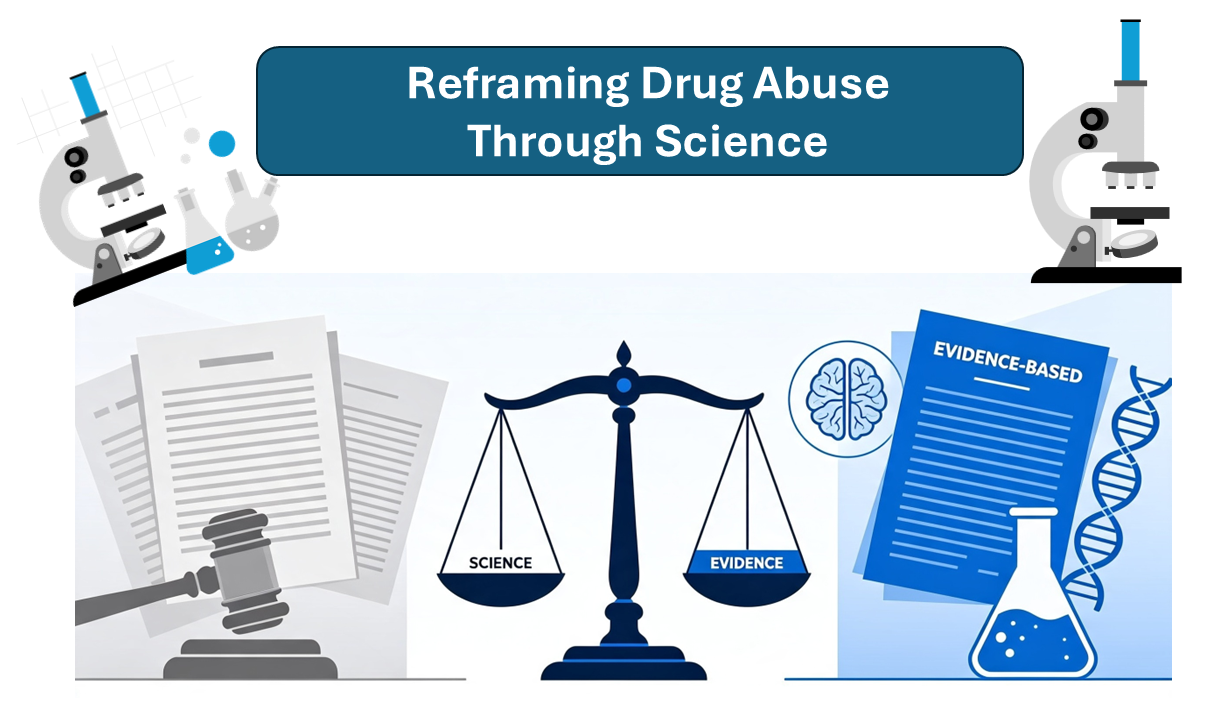
Substance use remains a significant global public health challenge, yet responses to drug-related harms are often influenced by stigma, misinformation, and punitive approaches. This commentary argues for reframing drug abuse through a scientific lens that recognizes addiction as a complex health condition shaped by interactions among biological vulnerability, psychological processes, social environments, and lived experiences. Advances in neuroscience, genetics, and public health have demonstrated that substance use disorders involve changes in brain function and are influenced by broader social determinants of health. A science-based approach can improve prevention, treatment, policy, and public understanding by replacing moral judgment with evidence-informed strategies. Prioritizing research, accessible care, harm reduction, and stigma reduction is essential for developing more effective and compassionate responses to substance use disorders.
References
Csete, J., Kamarulzaman, A., Kazatchkine, M., Altice, F., Balicki, M., Buxton, J., Cepeda, J., Comfort, M., Goosby, E., Goulão, J., Hart, C., Kerr, T., Lajous, A. M., Lewis, S., Martin, N., Mejía, D., Campero, L. M., Mathieson, D., Obot, I., & Beyrer, C. (2016). Public health and international drug policy. The Lancet, 387(10026), 1427-1480. https://doi.org/10.1016/S0140-6736(16)00619-X
Hayek, S., Foad, W., de Filippis, R., Ghosh, A., Koukach, N., Mahgoub Mohammed Khier, A., Pant, S. B., Padilla, V., Ramalho, R., Tolba, H., & Shalbafan, M. (2024). Stigma toward substance use disorders: A multinational perspective and call for action. Frontiers in Psychiatry, 15. https://doi.org/10.3389/fpsyt.2024.1295818
Gerring, Z. F., Thorp, J. G., Treur, J. L., Verweij, K. J. H., & Derks, E. M. (2024). The genetic landscape of substance use disorders. Molecular Psychiatry, 29, 3694-3705. https://doi.org/10.1038/s41380-024-02547-z
McLellan A. T. (2017). Substance Misuse and Substance use Disorders: Why do they Matter in Healthcare?. Transactions of the American Clinical and Climatological Association, 128, 112-130.
Newton, N. C., Conrod, P. J., Slade, T., Carragher, N., Champion, K. E., Barrett, E. L., Kelly, E. V., Nair, N. K., Stapinski, L., & Teesson, M. (2016). The long-term effectiveness of a selective, personality-targeted prevention program in reducing alcohol use and related harms: a cluster randomized controlled trial. Journal of Child Psychology and Psychiatry, and Allied Disciplines, 57(9), 1056-1065. https://doi.org/10.1111/jcpp.12558
Uhl, G. R., Koob, G. F., & Cable, J. (2019). The neurobiology of addiction. Annals of the New York Academy of Sciences, 1451(1), 5-28. https://doi.org/10.1111/nyas.13989
United Nations Office on Drugs and Crime. (2024). World drug report 2024. United Nations. https://www.unodc.org/unodc/en/data-and-analysis/world-drug-report-2024.html
Volkow, N. D., & Blanco, C. (2023). Substance use disorders: A comprehensive update of classification, epidemiology, neurobiology, clinical aspects, treatment and prevention. World Psychiatry, 22(2), 203-229. https://doi.org/10.1002/wps.21073
Wakeman, S. E., Larochelle, M. R., Ameli, O., Chaisson, C. E., McPheeters, J. T., Crown, W. H., Azocar, F., & Sanghavi, D. M. (2020). Comparative effectiveness of different treatment pathways for opioid use disorder. JAMA Network Open, 3(2), e1920622. https://doi.org/10.1001/jamanetworkopen.2019.20622
Downloads
Published
How to Cite
Issue
Section
License
Copyright (c) 2027 Ayodeji Saad Erubu

This work is licensed under a Creative Commons Attribution 4.0 International License.
Authors who publish with this journal agree to the following terms:
1) Authors retain copyright and grant the journal right of first publication with the work simultaneously licensed under a Creative Commons Attribution License that allows others to share the work with an acknowledgement of the work's authorship and initial publication in this journal.
2) Authors are able to enter into separate, additional contractual arrangements for the non-exclusive distribution of the journal's published version of the work (e.g., post it to an institutional repository or publish it in a book), with an acknowledgement of its initial publication in this journal.
3) Authors are permitted and encouraged to post their work online (e.g., in institutional repositories or on their website) prior to and during the submission process, as it can lead to productive exchanges, as well as earlier and greater citation of published work.