Silver oxide nanoparticle-decorated Ti3C2Tx MXene nanocomposites for biomedical applications: Antibacterial activity, wound healing, cancer therapy, biosafety, and future perspectives
DOI:
https://doi.org/10.14295/bjs.v6i1.926Keywords:
MXene, Ag NPs, biomedical application, nanomedicine, biosensorsAbstract
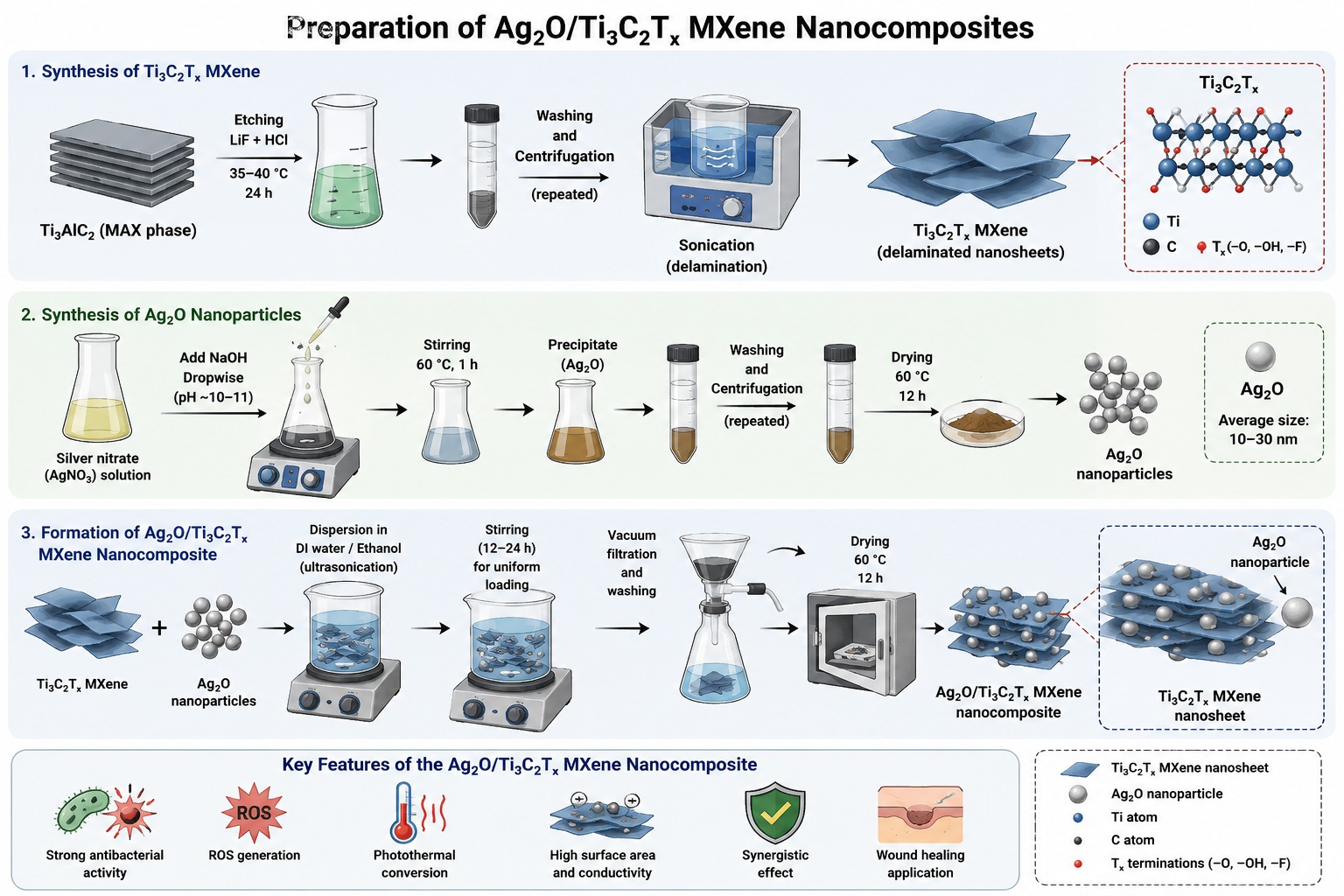
The rapid emergence of multidrug-resistant microorganisms and the growing demand for multifunctional biomedical materials have increased interest in hybrid nanocomposites with enhanced antibacterial, therapeutic, and diagnostic performance. Among these materials, silver oxide nanoparticles (Ag₂O NPs) have attracted considerable attention due to their broad-spectrum antimicrobial activity, reactive oxygen species generation, and potential biomedical functionality. However, their practical application is often limited by aggregation, uncontrolled ion release, stability concerns, and dose-dependent cytotoxicity. MXenes, particularly Ti₃C₂Tₓ MXene, offer a promising platform for overcoming these limitations because of their large surface area, hydrophilic surface terminations, excellent conductivity, photothermal conversion ability, and ease of surface modification. The integration of Ag₂O nanoparticles with MXene nanosheets can produce a synergistic nanocomposite with improved dispersion, enhanced antibacterial efficiency, controlled bioactivity, and potential utility in wound healing, infection control, cancer therapy, biosensing, and smart biomedical coatings. This review discusses the structural features, synthesis strategies, biomedical mechanisms, and therapeutic potential of Ag₂O-decorated Ti₃C₂Tₓ MXene nanocomposites. Special emphasis is placed on antibacterial mechanisms, including silver ion release, oxidative stress, bacterial membrane disruption, and MXene-assisted photothermal effects. The review also highlights wound-healing applications, anticancer potential, biosensing opportunities, and major biosafety challenges associated with Ag₂O/MXene systems. Finally, current limitations, including long-term toxicity, MXene oxidation, reproducibility, scalability, and clinical translation, are critically discussed. Overall, Ag₂O/MXene nanocomposites represent an emerging class of biomedical nanomaterials with strong potential for next-generation antimicrobial and therapeutic platforms.
References
Abazari, M., Akbari, T., Badeleh, S. M., Hasani, M., Foroumadi, A., Sharifikolouei, E., & Khoobi, M. (2026). A comprehensive review on the hemostatic properties of metal-based materials and substances. Biological Trace Element Research, 204, 4631-4655. https://doi.org/10.1007/s12011-026-04985-y
Abdullah, W., Ab Razak, N. N. A. N., Dheyab, M. A., Salem, F., Aziz, A. A., & Ghasemlou M. (2025). Melanin-driven green synthesis and surface modification of metal and metal-oxide nanoparticles for biomedical applications. Advanced Functional Materials, 35(43), 2503017. https://doi.org/10.1002/adfm.202503017
Ahmad, S., Akhtar, N., Fazil, P., Ahamd, M. S., Khan, J. A., Mirza, S., Qarni, A., Irfan, S., & Ateeq, M. (2026). Visible-light-active magnetic CuFe2O4 and Fe3O4 nanoparticles: efficient photocatalysts for allura red dye degradation with enhanced antibacterial activity. ChemistrySelect, 11(16), e05042. https://doi.org/10.1002/slct.202505042
Ahmed, I., Shah, S., Ayaz, M., Ahmed, I., Ali, M., Ahmad, N., & Ahmad, I. (2015). Production of biodiesel from algae. Journal of Pure and Applied Microbiology, 9(1), 79-85.
Al Bsoul, A., Hailat, M., Abdelhay, A., Tawalbeh, M., Jum’h, I., & Bani-Melhem, K. (2019). Treatment of olive mill effluent by adsorption on titanium oxide nanoparticles. Science of the Total Environment, 688, 1327-1334. https://doi.org/10.1016/j.scitotenv.2019.06.381
Al-Azzani, H., Vithran, D. T. A., Aliouat, H., Zhou, W., & Mao, X. (2025). Precision bacterial immunotherapy: an integrated mechanistic taxonomy and translational roadmap against antimicrobial resistance. Frontiers in Immunology, 16, 1675682. https://doi.org/10.3389/fimmu.2025.1675682
Ali, A., Khan, S. R., Shah, M., Matsumoto, M., Tahara, Y., Muhammad, S., & Khan, S. (2025). Fabrication, characterization, and adsorption studies of thermally modified peanut shell charcoal for Orange G dye removal. Biomass Conversion and Biorefinery, 15(10), 15645-15653. https://doi.org/10.1007/s13399-024-06451-y
Ali, S., Ali, S., Ismail, A., Wang, Y., Rahim, S., Raziq, F., & Qiao, L. (2026). Defective CeO2/copper phthalocyanine S-scheme heterojunctions with molecular copper centers for selective CO2-To-CO photoconversion. Electron, e70050. https://doi.org/10.1002/elt2.70050
Alsaiari, M., Roghani, K., Liaqat, S., Alkorbi, A. S., Sharif, F., Irfan, M., & Ahmad, N. (2023). Effect of ionic liquids on mechanical, physical, and antifungal properties and biocompatibility of a soft denture lining material. ACS Omega, 8(30), 27300-27311. https://doi.org/10.1021/acsomega.3c02677
Amin, M., Abbas, M. A., Mahar, J., Shahzad, M. S., & Rasool, M. S. (2026). Phyto-mediated green synthesis and physicochemical characterization of titanium dioxide nanoparticles for environmental and pharmacological applications. Journal of Physical and Chemical Studies, 1(4), 17-56. https://doi.org/10.5281/zenodo.19767807
Amir, J., Muhammad, S., Kashif, M., Khan, A. A., Gul, M., Sun, H., Azizi, S., & Maaza, M. (2025). Synthesis, characterization and dielectric properties evaluation of NiO-Co3O4 nanocomposite. Journal of the Iranian Chemical Society, 22(1), 63-72.
Anwar, N., Shah, M., Anwar, S. H., Shah, M. I. A., Zada, A., & Abd-Allah, E. F. (2025). Bio-catalytic activity of novel poly (ethylene glycol) methacrylate hybridized silver nanomaterials. South African Journal of Botany, 176, 197-206. https://doi.org/10.1016/j.sajb.2024.11.017
Ayed, A. B., Masoudi, M., & Namvari, M. (2026). Engineered 3D MXene- and GO-based Ag nanocomposites with enhanced stability and antibacterial performance. FlatChem, 57, 101052. https://doi.org/10.1016/j.flatc.2026.101052
Azam, J., Ahmad, Z., Irfan, A., Naz, A., Arshad, M., Sattar, R., Raish, M., Abbasi, B. B. K., & Hardan, Y. A. B. (2025). Polyol formation of silver@metal oxides nanohybrid for photocatalytic and antibacterial performance. Catalysts, 15(3), 283. https://doi.org/10.3390/catal15030283
Bakhtiar, S. U. H., Zada, A., Raziq, F., Ali, S., Khan, W., Nazir, R., Dong, W., & Fu, Q. (2023). Zinc phthalocyanine sensitized g-C3N4 photocatalyst for exceptional photocatalytic hydrogen evolution and pollutant degradation. International Journal of Hydrogen Energy, 48(43), 16320-16329. https://doi.org/10.1016/j.ijhydene.2023.01.152
Bandodkar, A. J., & Wang, J. (2014). Non-invasive wearable electrochemical sensors. Trends in Biotechnology, 32(7), 363-371. https://doi.org/10.1016/j.tibtech.2014.04.005
Bushra, Kashif, M., Khairullah, Khan, A. A., Sun, H., Yousaf, J., Shah, M. I. A., Hussain, S., Amir, J., Jamal, Y., & Ahmad, T. (2024b). Synthesis and characterization of Fe-doped CuO nanoparticles: Catalytic efficiency in crystal violet dye degradation and exploration of electrical properties. Brazilian Journal of Science, 3(8), 1-18. https://doi.org/10.14295/bjs.v3i8.601
Butler, J., Handy, E. D., Upton, M., & Besinis, A. (2023). Review of antimicrobial nanocatings in medicine and dentistry: Mechanisms of action, biocompatibility performance, safety, and benefits compared to antibiotics. ACS Nano, 17(8), 7064-7092. https://doi.org/10.1021/acsnano.2c12488
Butler, K. T., Davies, D. W., Cartwright, H., Isayev, O., & Walsh, A. (2018). Machine learning for molecular and materials science. Nature, 559, 547-555. https://doi.org/10.1038/s41586-018-0337-2
Chetry, M., Feng, R., Babar, S., Sun, H., Zafar, I., Mohany, M., Afridi, H. I., Khan, N. U., Ali, I., Shafiq, M., & Khan, S. (2025). Early detection and analysis of accurate breast cancer for improved diagnosis using deep supervised learning for enhanced patient outcomes. Peer J Computer Science, 11, e2784. https://doi.org/10.7717/peerj-cs.2784
Del Toro, F., Mencía, E., Vallarino, J. G., Makki, M., Sun, H., & Canto, T. (2024). A potato virus Y infection under ambient conditions that turn it asymptomatic affects the physiology of the host, and its interplay with drought. Preprints.org. http://doi.org/10.20944/preprints202407.1421.v1
Del Toro, F., Sun, H., Robinson, C., Jiménez, Á., Covielles, E., Higuera, T., Aguilar, E., Tenllado, F., & Canto, T.(2022). In planta vs viral expression of HCPro affects its binding of nonplant 21-22-nucleotide small RNAs, but not its preference for 5’-terminal adenines or its effects on small RNA methylation. New Phytologist, 233(5), 2266-2281. https://doi.org/10.1111/nph.17935
Deng, Z., Xiang, Z., Zhu, S., Zhang, Y., Du, Y., Wang, S., Kang, Z., Wang, Z., Tong, X., & Liu, Y. (2025). Switching cathodic/anodic electrochemiluminescence of Ru (bpy)32+ Precisely via homogeneous nickel nanoparticles crystal facets sites modulated ORR/OER. Exploration, 5(5), 20250036. https://doi.org/10.1002/EXP.20250036
Elahi, N., & Rizwan, M. (2021). Progress and prospects of magnetic iron oxide nanoparticles in biomedical applications: A review. Artificial Organs, 45(11), 1272-1299. https://doi.org/10.1111/aor.14027
European Medicines Agency. (EMA). (2024). Medical devices and nanotechnology. Available in: https://www.ema.europa.eu. Accessed on: July 10, 2026.
Fan, Z., Gao, F., Zhang, J., Luo, N., Yi, H., & Tang, X. (2025). Advances in CO catalytic oxidation on typical metal oxide catalysts: performance, mechanism, and optimization. Journal of Materials Chemistry A, 13(32), 26129-26165. https://doi.org/10.1039/d5ta03067f
Ghani, I., Kashif, M., Khattak, O. A., Shah, M., Nawaz, S., Ullah, S., Murad, S., Naz, S., Khan, H. W., Muhammad, S., & Jamal. M. (2023). Hydrothermal synthesis and characterization of Cobalt doped Bismuth oxide NPs for photocatalytic degradation of methyl orange dye. Journal of Xi’an Shiyou University, Natural Science Edition, 19(7), 1195-1217.
Gul, M., Kashif, M., Muhammad, S., Azizi, S., & Sun, H. (2025). Various methods of synthesis and applications of gold-based nanomaterials: a detailed review. Crystal Growth & Design, 25(7), 2227-2266. https://doi.org/10.1021/acs.cgd.4c01687
Gul, M., Kashif, M., Shahid, K., & Natasha. (2024). Eco-friendly approaches in the synthesis of ZnO nanoparticles using plant extract: A review. Phytopharmacology Research Journal, 3(2), 1-25.
Hao, S., Han, H., Yang, Z., Chen, M., Jiang, Y., Lu, G., Dong, L., Wen, H., Li, H., Liu, J., Wu, L., Wang, Z., & Wang, F. (2022). Recent advancements on photothermal conversion and antibacterial applications over MXenes-based materials. Nano-Micro Letters, 14. https://doi.org/10.1007/s40820-022-00901-w
Harun-Ur-Rashid, M., Foyez, T., Krishna, S. B. N., Poda, S., & Imran, A. B. (2025). Recent advances of silver nanoparticle-based polymer nanocomposites for biomedical applications. Royal Society of Chemistry, 15(11), 8480-8505. https://doi.org/10.1039/d4ra08220f
Hayat, A., Sohail, M., Hamdy, M. S., Mane, S. K. B., Amin, M. A., Zada, A., Medina, D. I., & Nawawi, W. I. (2022). Biomass lignin integrated polymeric carbon nitride for boosted photocatalytic hydrogen and oxygen evolution reactions. Molecular Analysis, 518, 112064. https://doi.org/10.1016/j.mcat.2021.112064
Heikenfeld, J., Jajack, A., Rogers, J., Tian, L., Khine, M., & Wang, J. (2018). Wearable sensors: Modalities, challenges and prospects. Lab on a Chip, 18, 217-248. https://doi.org/10.1039/C7LC00914C
Hussain, S., Kashif, M., Ali, M., Gul, M., Azizi, S., & Maaza, M. (2026). Ligand-engineered mesoporous silica: Cutting-edge architectures for targeted toxic heavy metal sequestration – A review. Advanced Materials Science and Engineering, 2026(1), 3228002. https://doi.org/10.1155/amse/3228002
Irfan, S., Ali, H., Aman, N., Gao, C., Qiao, Z., Sun, H, Amir, J., Shah, A., & Kashif, M. (2024). Biomedical Applications of Titanium Dioxide (TiO₂) Nanoparticles. Phytopharmacology Research Journal, 3(3), 29-40.
Jamal, M., Nabi, G. A. K., Sun, H., Ullah, K., Khattak, O. A., Kashif, M., Khan, S., Alam, M., Hussain, S., Ullah, M., Aleena, S., Haq, H., Umar, S., Atif, M., Hussain, I., & Masood, A. (2024). Preparation of manganese-doped bismuth oxide for the photocatalytic degradation of methylene blue. Archives of Advanced Engineering Science, 1-7. https://doi.org/10.47852/bonviewAAES42023402
Jamil, M., Shah, A., Aman, G., Shabir, F., Begum, R., Sun, H., Rafiq, S., Iqbal, N., Aman, N., Aman, N., & Liaqat, Z. (2025). Bismuth vanadate nanoparticles: Structure, synthesis, and emerging engineering applications. Biomedical: Journal of Scientific & Technical Research, 62(3), 54728-54740. https://dx.doi.org/10.26717/BJSTR.2025.62.009758
Jangra, S., Kumar, B., Sharma, J., Das, S., & Goyat, M. S. (2025). MXenes: synthesis, properties, and applications in advanced energy storage technologies. Zastita Materijala, 66(3). https://doi.org/10.62638/ZasMat1216
Jia, B., et al., Zhao, L., Tang, M., Xie, N., Huang, Y., Liang, X., Yang, G., Wu, Q., & Sun, Z. (2026). Neuron–tumor crosstalk in cancer: molecular mechanisms and translational advances. Molecular Cancer. https://doi.org/10.1186/s12943-026-02715-5
Kashif, M., Gul, M., Shahzad, N., Sun, H., Shezan, A. A., Ahmad, N., Hamlaoui, O., & Tozan, H. (2026). Metal oxide nanoparticles: A comprehensive review of recent advances in synthesis strategies, characterization and multifunctional applications. Preprints.org10. https://www.preprints.org/manuscript/202606.1716
Kashif, M., Jawad, M., Khan, A. A., Sun, H., Ullah, K., Fakayode, O. J., & Azizi, S. (2024a). Fe/Ti-codoped strontium oxide nanoparticles for enhanced photocatalytic degradation of methyl orange. Journal of Applied Research in Water and Wastewater, 11(1), 8-14. https://doi.org/10.22126/arww.2024.10753.1336
Kashif, M., Sharif, T., Khan, S., Shahzad, N., Amir, J., Gul, M., Shahid, K., Qarni, A., Shah, A., & Matinise, N. (2026). Synthesis strategies and multifaceted applications of molybdenum‐based nanomaterials: A comprehensive review. Scientifica, 2026(1), 1764400. https://doi.org/10.1155/sci5/1764400
Khan, M., Sun, X., Kashif, M., Zada, A., Azizi, S., Ragab, A. H., Taher, M. A., Abbas, Q., & Shehzad, K. (2025). Exploration of bismuth-based nanomaterials: From fundamental concepts to innovative synthesis techniques and emerging applications. Coordination Chemistry Reviews, 538, 216687. https://doi.org/10.1016/j.ccr.2025.216687
Khan, S., Kalsoom, U., Jashif, M., Hussain, S. A., Gul, M., Azizi, S., & Maaza, M. (2025). Smart and sustainable microplastic removal: Hybrid systems, bio-inspired technologies, real-time sensing, and policy integration. Water, Air, & Soil Pollution, 236(14), 900. https://doi.org/10.1007/s11270-025-08468-z
Li, J., Zhang, Y., Han, Y., Chen, J., Zada, A., Han, Y., Li, X., & Dang, A. (2026). In-situ construction of Ni on fix-reduced graphene fibers by electroless plating strategy for extraordinary electromagnetic wave adsorption. Colloids and Surfaces A: Physicochemical and Engineering, 139083. https://doi.org/10.1016/j.colsurfa.2025.139083
Li, L., Mansor, Z., Ismail, F. F., Zhao, X., Guo, X., Sun, H., Jing, Y., & Xu, Y. (2025). Compliance-aware and explainable GA-optimized neural network for cost estimation in safety-critical medical software. Research Square. https://doi.org/10.21203/rs.3.rs-7593580/v1
Li, L., Mansor, Z., Ismail, F. F., Zhao, X., Li, X., Sun, H., & Guo, X. (2026). Explainable AI–driven optimization for transparent and auditable decision-making in medical software. Journal of King Saud University Computer and Information Sciences.https://doi.org/10.1007/s44443-026-00748-w
Li, L., Mansor, Z., Zhao, X., Xiong, X., Guo, X., Li, X., & Sun, H. (2026). An explainable hyperparameter-optimized genetic algorithm–backpropagation (GA–BP) neural network model for medical software cost estimation. PeerJ Computer Science, 12, e3477. https://doi.org/10.7717/peerj-cs.3477
Li, Z., Sun, H., Chen, X., Peng, P., Sun, H., Chen, S., Hashif, M., Xie, R., Liang, Q., Luo, Y., Li, T., Ou, Q., Huang, S., & Jiang, C. (2025). Integrated multiomics elucidates glutathione metabolic regulation in a marine aromatic probiotic yeast Meyerozyma guilliermondii GXDK6 under salt stress. ACS Omega, 10(41), 48965-48975. https://doi.org/10.1021/acsomega.5c07376
Madani, S. S., Habibi-Yangjeh, A., Asadzadeh-Khaneghah, S., Chand, H., Krishnan, V., & Zada, A. (2021). Integration of Bi4O5I2 nanoparticles with ZnO: impressive visible-light-induced systems for elimination of aqueous contaminants. Journal of the Taiwan Institute of Chemical Engineers, 119, 177-186. https://doi.org/10.1016/j.jtice.2021.01.020
Mao, Z., Liu, S., Lin, S., Qi, K., Zada, A., & Chai, S-P. (2026). Photocatalytic degradation of tetracycline and antibacterial performance by S-scheme Bi2WO6/TiO2 heterojunction. Chemical Research in Chinese Universities, 42, 907-917. https://doi.org/10.1007/s40242-026-5284-0
Moosavi, S. M., Nandy, A., Jablonka, K. M., Ongari, D., Janet, J. P., & Kulik, H. J. (2020). Understanding the diversity of the metal-organic framework ecosystem. Nature Communications, 11, 4068. https://doi.org/10.1038/s41467-020-17755-8
Mostafalu, P., Rahimi, R., Ochoa, M., Khalilpour, A., Dokmeci, M. R., & Ziaie, B. (2018). A textile dressing for real-time sensing and treatment of chronic wounds. Small, 14, 1703509. https://doi.org/10.1002/smll.201703509
Muhammad, S., Ali, A., Shah, J., Hamza, M., Kashif, M., Khel, B. K., & Iqbal, A. (2023). Using Moringa oleifera stem extract for green synthesis, characterization, and anti-inflammatory activity of silver oxide nanoparticles. Natural and Applied Sciences International Journal, 4(1), 80-97. https://doi.org/10.47264/idea.nasij/4.1.6
Muhammad, S., Sun, H., Zahoor, S., Kahn, S., Ullah, R., Fu, B., Ullah, S., Isimjan, T. T., Azizi, S., & Yang, X. (2026). Advancing MOFs for electrocatalytic ORR, UOR, and CO2RR: From fundamentals to device integration and deployment challenges. Materials Science and Engineering: R: Reports, 171, 101248.
Muhammad, S., Wang, L., Gao, M., Khan, S., Xu, W., Ali, A., Isimjan, T. T., Azizi, S., & Yang, X. (2026). Fe-Ce interaction-driven active site modulation in a porous MOF for oxygen evolution reaction. Fuel, 405, 136782. https://doi.org/10.1016/j.fuel.2025.136782
Muhammad, S., Wang, L., Huang, Z., Zhou, A., Bilal, H., Isimjan, T. T., & Yang, X. (2025). Recent advances in lanthanide-based materials for oxygen evolution reaction: Challenges and future prospects. Coordination Chemistry Reviews, 534, 216573. https://doi.org/10.1016/j.ccr.2025.216573
Muhammad, S., Yao, B., Zhou, A., Huang, Z., Khan, S., Wei, F., Luo, Z., Isimjan, T. T., & Yang, X. (2025). Unveiling dynamic surface transformations: Mo-doped Fe-based MOFs as next-generation oxygen evolution catalysts. Green Chemistry, 27(19), 5554-5566.
Ray, T. R., Choi, J., Bandodkar, A. J., Tian, L., & Rogers, J. A. (2019). Bio-integrated wearable systems: A comprehensive review. Chemical Reviews, 119(8), 5461-5533. https://doi.org/10.1021/acs.chemrev.8b00573
Reddy, S. S., Iqbal, A., Mayekar, J., Momin, N., & Radha, S. (2026). Nanostructured metal and metal oxide materials for advanced water filtration: Recent progress and perspectives. International Journal of Research and Analytical Reviews, 13(1).
Rehman, A. U., Humayun, M., Khan, A., Zada, A., & Jing, L. (2016). Effect of biocides on the precipitation of calcium fluoride in the presence of anionic copolymeric inhibitors. Toxicological & Environmental Chemistry, 98(7), 748-758. https://doi.org/10.1080/02772248.2015.1124107
Rzaij, J. M., Nawaf, S. O., & Ibrahim, A. K. (2022). A review on tin dioxide gas sensor: The role of the metal oxide doping, nanoparticles, and operating temperatures. World Journal of Advanced Research and Reviews, 14(01), 051. https://doi.org/10.30574/wjarr.2022.14.1.0288
Schleder, G. R., Padilha, A. C. M., Acosta, C. M., Costa, M., & Fazzio, A. (2019). From DFT to machine learning: Recent approaches to materials science. Journal of Physics: Materials, 2, 032001. https://doi.org/10.1088/2515-7639/ab084b
Shah, A., Sun, H., Qiao, Z., Khan, M. U., Ali, N., Amir, J., Aleena, S., & Kashif, M. (2024). Synthesis of iron oxide nanoparticles and its antimicrobial, anticancer, anti-inflammatory, wound healing, and immunomodulatory activities-A Review. Phytopharmacology Research Journal, 3(3), 1-28.
Shah, J., Sun, H., Qiao, Z., Sharif, T., & Gul, M. (2024). Enhanced degradation of methylene blue dye using hydrothermally synthesized Nickel-doped Strontium oxide catalysts. Brazilian Journal of Science, 3(12), 13-27. https://doi.org/10.14295/bjs.v3i12.663
Shah, M., Hameed, A., Kashif, M., Majeed, N., Muhammad, J., Shah, N., & Hashtoh, H. (2024). Advances in agar-based composites: a comprehensive review. Carbohydrate Polymers, 346, 22619. https://doi.org/10.1016/j.carbpol.2024.122619
Shang, C., Shi, L., Zhou, S., Muhmmad, S., Isimjan, T. T., Hu, H., & Yang, X. (2024). Interface engineering of Co2B–MoO3/MOF heterojunctions with rich cobalt defects for highly enhanced NaBH4 hydrolysis. Inorganic Chemistry Frontiers, 11(20), 7142-7151. https://doi.org/10.1039/d4qi01721h
Stach, E. A., DeCost, B., Kusne, A. G., Stanev, V., & Maruyama, B. (2021). Autonomous experimentation systems for materials development. Nature Reviews Materials, 6, 9-27.
Sun, H. (2025). Characterization of molecular properties of the potyviral protein HCPro, and their role in the interaction of the virus with its environment. Universidad Autónoma de Madrid, España.
Sun, H., Ciska, M., Makki, M., Tenllado, F., & Canto, T. (2024). Adaptive substitutions at two amino acids of HCPro modify its functional properties to separately increase the virulence of a potyviral chimera. Molecular Plant Pathology, 25(6), e13487. https://doi.org/10.1111/mpp.13487
Sun, H., del Toro, F., Makki, M., Tenllado, F., & Canto, T. (2022). Adaptation of a potyvirus chimera increases its virulence in a compatible host through changes in HCPro. Plants, 11(17), 2262. https://doi.org/10.3390/plants11172262
Sun, H., Gul, M., Sakina, Khan, A., Liaqat, Z., Aleena, S., & Ali, A. (2026). Engineering disorder in high-entropy metal oxides for advanced functional applications. Brazilian Journal of Science, 5(8), 38-51. https://doi.org/10.14295/bjs.v5i8.885
Sun, H., Ji, D., Ma, C., Pang, R., Yuan, B., Liu, J., Zhang, H., & Zhang, M. (2024). Bioinspired aerogels: ingenious structure, remarkable performance, and versatile applications. Journal of Materials Chemistry A, 12(21), 12358-12380. https://doi.org/10.1039/d4ta00851k
Sun, H., Sohail, A., Shah, A., Liaqat, Z., Gul, M., & Liangyu. (2025). From precursors to performance: Diverse synthesis strategies for cerium oxide nanoparticles. Phytopharmacology Research Journal, 4(2), 28-42.
Tahir, N., Zahid, M., Bhatti, I. A., Mansha, A., & Hussain, T. (2021). Metal oxide-based ternary nanocomposites for wastewater treatment. In: Aquananotechnology, Chapter 7, Elsevier, 135-158 p. https://doi.org/10.1016/B978-0-12-821141-0.00022-7
Topol, E. (2019). High-performance medicine: The convergence of human and artificial intelligence. Nature Medicine, 25, 44-56. https://doi.org/10.1038/s41591-018-0300-7
U. S. Food and Drug Administration. (FDA). (2024). Medical devices. Available in: https://www.fda.gov/medical-devices. Accessed on: June 03, 2026.
Ur Rehman, M., Yin, R., Yang, Z-D., Zhang, G., Liu, Y., Zhang, F.-M., Yu, C., & Muhammad, S. (2025). Fabrication and modification of hydrotalcite-based photocatalysts and their composites for CO2 Reduction: A critical review. ChemSusChem, 18(10), e202402333. https://doi.org/10.1002/cssc.202402333
Wang, J., Fazil, P., Shah, M. I. A., Zada, A., Anwar, N., Zain, G. G., Khan, W., Jan, F., & Ateeq, M. (2023). Surface plasmon assisted photocatalytic hydrogen generation with Ag decorated g-C3N4 coupled SnO2 nanophotocatalyst under visible-light driven photocatalysis. International Journal of Hydrogen Energy, 48(57), 21674-21685. https://doi.org/10.1016/j.ijhydene.2023.03.048
Wang, W., Gao, R., Zhang, L., DONG, Y., Du, Y., Dai, Q., Liu, B., Fang, C., Wang, C., Sun, H., & Huang, W. (2026). Precisely targeting cardiac remodeling nanomachine for restarting healthy heartbeat. Advanced Healthcare Materials, 15(3), e03478. https://doi.org/10.1002/adhm.202503478
Yang, J., Hassan, N., Kalsoom, U. E., Mushtaq, F., ul Haq, M. H., & Mahmood, S. (2024). Synthesis of novel Bi/Bi2O3@ Al2O3 nanocomposites for wastewater treatment, self-cleaning, and corrosion resistance. New Journal of Chemistry, 48(37), 16243-16260. https://doi.org/10.1039/d4nj02556c
Yasmeen, H., Zada, A., Li, W., Xu, M., & Liu, S. (2019). Suitable energy platform of Bi2WO6 significantly improves visible-light degradation activity of g-C3N4 for highly toxic diuron pollutant. Materials Science in Semiconductor Processing, 102, 104598. https://doi.org/10.1016/j.mssp.2019.104598
Ye, F., Li, T., Chen, J., Liu, Y., Wu, S., Zada, A., & Dang, A. (2024). Fabrication of high-performance graphene fiber: Structural evolution strategy from a two-step green reduction method. Ceramics International, 50(22), 48575-48582. https://doi.org/10.1016/j.ceramint.2024.09.205
Zada, A., & Azizi, S. (2026). Synergistic advanced oxidation and physicochemical treatment strategies for antibiotic removal and resistance mitigation in water. Asia-Pacif Journal of Chemical Engineering, e70265. https://doi.org/10.1002/apj.70265
Zahoor, S., Muhammad, S., Kashi, M., Shhzad, N., Liu, Y-C., Celik, C., Ambreen, N., Ali, A., Wu, H-F., Azizi, S., & Wen, S. (2026). Advances in mesoporous nanomaterials for photocatalytic degradation of pollutants: fundamentals, material classifications, challenges and future prospects. Coordination Chemistry Reviews, 549, 217239. https://doi.org/10.1016/j.ccr.2025.217239
Zeng, X., & Sun, H. (2025). Enhancing the understanding of complement protein changes in RVO: Insights and suggestions. Journal of Inflammation Research, 18, 2781-2782. https://doi.org/10.2147/JIR.S522685
Zhang, B., Zhang, H., Zhu, L., Weng, X., & Sun, H. (2026). Complex research review on environmental risk management of soil microplastic contamination: Treatment technologies and global perspectives. MSI Journal of Multidisciplinary Research, 3(4) 1-34. https://zenodo.org/records/19660481
Zhang, B., Zhang, H., Zhu, L., Weng, X., & Sun, H. (2026). Microplastics in the human gastrointestinal system: A comprehensive study of metabolic risks and digestive toxicity. MSI Journal Multidisciplinary Research, 3(4), 1-31. https://zenodo.org/records/19660158
Zhao, P., Sun, H., & Han, Q. (2025). Development and application of an intelligent platform for automated recognition of surgical instruments in laparoscopic procedures: a multicenter retrospective study. International Journal of Surgery, 111(10), 7379. https://doi.org/10.1097/JS9.0000000000002726
Zhu, H., Sun, H., Dai, J., Hao, J., & Zhou, B. (2024). Chitosan-based hydrogels in cancer therapy: Drug and gene delivery, stimuli-responsive carriers, phototherapy and immunotherapy. International Journal of Biological Macromolecules, 282, 137047. https://doi.org/10.1016/j.ijbiomac.2024.137047
Zia, R., Nazir, M. S., Rouf, H., Ahmad, N., Ahmad, F., Ali, Z., & Hassan, S. U. (2025). Modified lignin etched sulphur-doped graphitic carbon nitride for electrochemical sensing of cypermethrin in drinking water: Experimental and theoretical insights. International Journal of Biological Macromolecules, 146503. https://doi.org/10.1016/j.ijbiomac.2025.146503
Zou, Z., Mu, Y., Han, M., Hu, H., Zheng, K., Man, Q., Qiu, Z., Wei, L., Zeng, L., & Zhao, T. (2026). Ion storage mechanisms in TiO2. Nano Research Energy, 5(2), e9120207. https://doi.org/10.26599/NRE.2025.9120207
Downloads
Published
How to Cite
Issue
Section
License
Copyright (c) 2027 Hifsa Nawaz, Osama Ali Khattak

This work is licensed under a Creative Commons Attribution 4.0 International License.
Authors who publish with this journal agree to the following terms:
1) Authors retain copyright and grant the journal right of first publication with the work simultaneously licensed under a Creative Commons Attribution License that allows others to share the work with an acknowledgement of the work's authorship and initial publication in this journal.
2) Authors are able to enter into separate, additional contractual arrangements for the non-exclusive distribution of the journal's published version of the work (e.g., post it to an institutional repository or publish it in a book), with an acknowledgement of its initial publication in this journal.
3) Authors are permitted and encouraged to post their work online (e.g., in institutional repositories or on their website) prior to and during the submission process, as it can lead to productive exchanges, as well as earlier and greater citation of published work.