Analysis of one-carbon compound microbial assimilation pathways and research progress in synthetic biology modification
DOI:
https://doi.org/10.14295/bjs.v5i4.864Keywords:
one-carbon compounds, methylotrophy, synthetic biology, metabolic engineering, carbon fixationAbstract
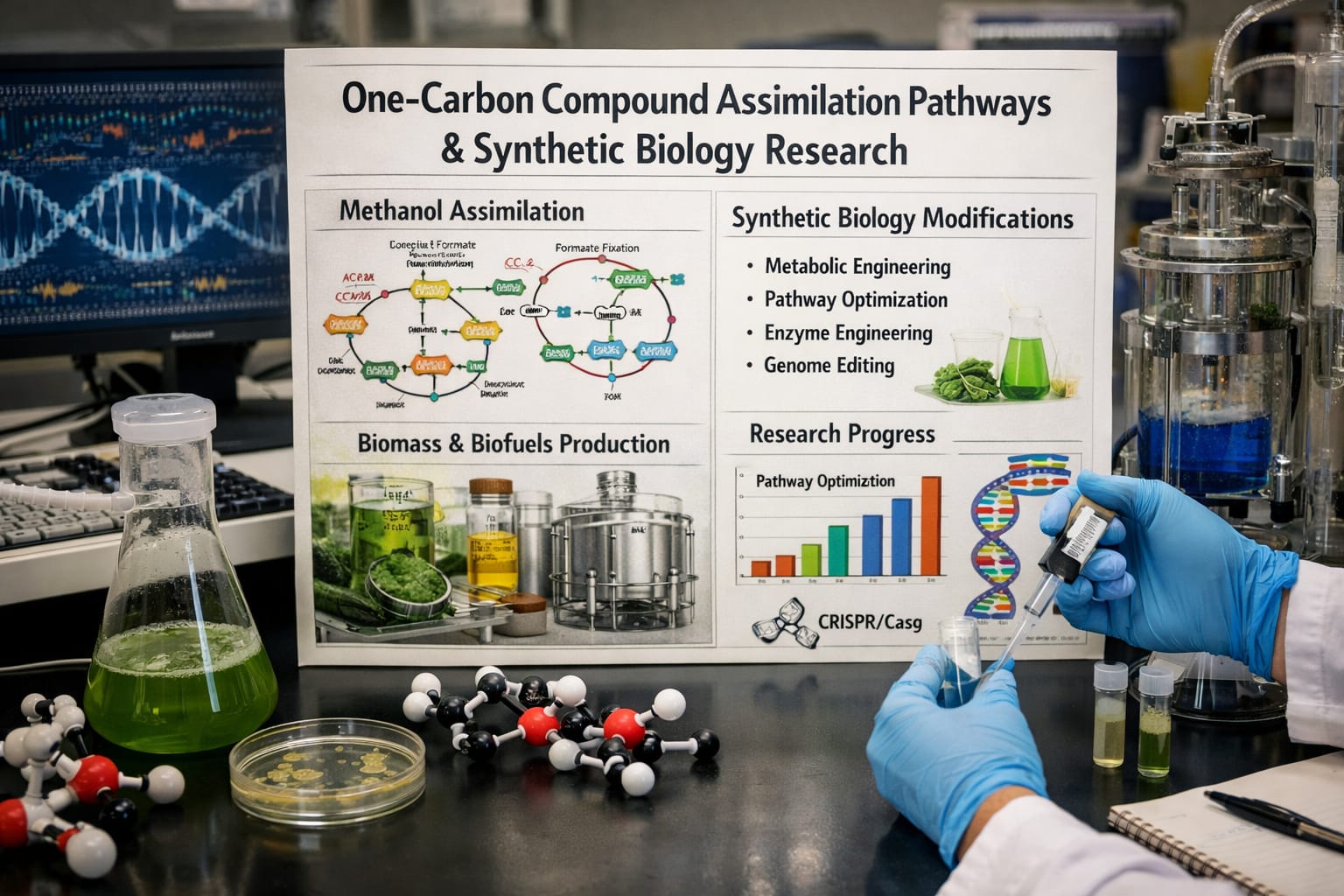
One-carbon (C1) compounds, including methane, methanol, formate, and carbon dioxide, represent promising alternative feedstocks for sustainable biomanufacturing. This comprehensive review systematically analyzes the molecular mechanisms underlying microbial assimilation of C1 compounds, focusing on key metabolic pathways including the ribulose monophosphate (RuMP) pathway, xylulose monophosphate (XuMP) pathway, serine cycle, and the reductive glycine (rGly) pathway. We discuss recent advances in synthetic biology approaches for engineering C1-utilizing microorganisms, including pathway optimization, enzyme engineering, adaptive laboratory evolution, and compartmentalization strategies. Furthermore, we present an analysis of the development of the synthetic biology industry in major Chinese provinces and autonomous regions, including Xinjiang, Gansu, Ningxia, Hunan, and Guangdong. The review highlights the challenges and future directions in developing efficient C1-based cell factories for industrial applications, emphasizing the integration of multi-omics approaches, artificial intelligence, and systems metabolic engineering to enable next-generation C1 biotransformation platforms.
References
Amir, J., Muhammad, S., Kashif, M., Khan, A. A., Gul, M., Sun, H., Shah, M., Azizi, S., & Maaza, M. (2025). Synthesis, characterization and dielectric properties evaluation of NiO-Co3O4 nanocomposite. Journal of the Iranian Chemical Society, 22, 63-72. https://doi.org/10.1007/s13738-024-03129-0. DOI: https://doi.org/10.1007/s13738-024-03129-0
Anthony, C. (1982). The biochemistry of methylotrophs. Academic Press, London. https://doi.org/10.1016/0014-5793(83)80989-2 DOI: https://doi.org/10.1016/0014-5793(83)80989-2
Anthony, C. (1986). Bacterial oxidation of methane and methanol. Advances in Microbial Physiology, 27, 113-210. https://doi.org/10.1016/S0065-2911(08)60305-7 DOI: https://doi.org/10.1016/S0065-2911(08)60305-7
Anthony, C. (1993). Methanol dehydrogenase in Gram-negative bacteria. In: Principles and Applications of Quinoproteins, Chapter 17-38. https://doi.org/10.1201/9781003067009. DOI: https://doi.org/10.1201/9781003067009-2
Anthony, C. (2004). The quinoprotein dehydrogenases for methanol and glucose. Archives of Biochemistry and Biophysics, 428(1), 2-9. https://doi.org/10.1016/j.abb.2004.03.038 DOI: https://doi.org/10.1016/j.abb.2004.03.038
Anthony, C. (2011). How half a century of research was required to understand bacterial growth on C1 and C2 compounds; the story of the serine cycle and the ethylmalonyl-CoA pathway. Science Progress, 94, 109-137. https://doi.org/10.3184/003685011X13044430633960 DOI: https://doi.org/10.3184/003685011X13044430633960
Antoniewicz, M. R. (2019). Synthetic methylotrophy: Strategies to assimilate methanol for growth and chemicals production. Current Opinion in Biotechnology, 59, 165-174. https://doi.org/10.1016/j.copbio.2019.07.001 DOI: https://doi.org/10.1016/j.copbio.2019.07.001
Bae, J., Kim, J., Seo, H., Park, S., Cho, B. K., & Sohn, J. H. (2022). Recent progress in the engineering of C1-utilizing microbes. Current Opinion in Biotechnology, 78, 102828. https://doi.org/10.1016/j.copbio.2022.102836 DOI: https://doi.org/10.1016/j.copbio.2022.102836
Bar-Even, A., Noor, E., Lewis, N. E., & Milo, R. (2010). Design and analysis of synthetic carbon fixation pathways. Proceedings of the National Academy of Sciences, 107, 8889-8894. https://doi.org/10.1073/pnas.0907176107 DOI: https://doi.org/10.1073/pnas.0907176107
Bennett, R. K., Dillon, M., Har, J. R. G., Agee, A., van Hagel, B., Rohlhill, J., Antoniewics, M. R., & Papoutsakis, E. T. (2020). Engineering Escherichia coli for methanol-dependent growth on glucose for metabolite production. Metabolic Engineering, 62, 42-51. https://doi.org/10.1016/j.ymben.2020.03.003. DOI: https://doi.org/10.1016/j.ymben.2020.03.003
Bennett, R. K., Steinberg, L. M., Chen, W., & Papoutsakis, E. T. (2018). Engineering the bioconversion of methane and methanol to fuels and chemicals in native and synthetic methylotrophs. Current Opinion in Biotechnology, 50, 81-93. https://doi.org/10.1016/j.copbio.2017.11.010 DOI: https://doi.org/10.1016/j.copbio.2017.11.010
Beste, D. J., Bonde, B., Hawkins, N., Ward, J. L., Beale, M. H., Noack, S., Nöh, K., Kruger, N. J., Ratcliffe, R. G., & McFadden, J. (2011). ¹³C metabolic flux analysis identifies an unusual route for pyruvate dissimilation in mycobacteria which requires isocitrate lyase and carbon dioxide fixation. PLoS pathogens, 7(7), e1002091. https://doi.org/10.1371/journal.ppat.1002091 DOI: https://doi.org/10.1371/journal.ppat.1002091
Bogorad, I. W., Lin, T. S., & Liao, J. C. (2013). Synthetic non-oxidative glycolysis enables complete carbon conservation. Nature, 502, 693-697. https://doi.org/10.1038/nature12575. DOI: https://doi.org/10.1038/nature12575
Celinska, E. (2017). Debottlenecking the 1,3-propanediol pathway by metabolic engineering. Biotechnol. Adv. 35, 1586-1603. https://doi.org/10.1016/j.biotechadv.2010.03.003. DOI: https://doi.org/10.1016/j.biotechadv.2010.03.003
Chistoserdova, L. (2011). Modularity of methylotrophy, revisited. Environmental Microbiology, 13, 2603-2622. https://doi.org/10.1111/j.1462-2920.2011.02464.x DOI: https://doi.org/10.1111/j.1462-2920.2011.02464.x
Chistoserdova, L., Chen, S. W., Lapidus, A., & Lidstrom, M. E. (2003). Methylotrophy in Methylobacterium extorquens AM1 from a genomic point of view. Journal of Bacteriology, 185(10), 2980–2987. https://doi.org/10.1128/JB.185.10.2980-2987.2003 DOI: https://doi.org/10.1128/JB.185.10.2980-2987.2003
Chistoserdova, L., Vorholt, J. A., Thauer, R. K., & Lidstrom, M. E. (1998). C1 transfer enzymes and coenzymes linking methylotrophic bacteria and methanogenic Archaea. Science, 281(5373), 99-102. https://doi.org/10.1126/science.281.5373.99 DOI: https://doi.org/10.1126/science.281.5373.99
Cotton, C. A., Edlich-Muth, C., & Bar-Even, A. (2020). Reinforcing carbon fixation: CO2 reduction replacing and supporting carboxylation. Current Opinion in Biotechnology, 49, 49-56. https://doi.org/10.1016/j.copbio.2017.07.014 DOI: https://doi.org/10.1016/j.copbio.2017.07.014
Dai, Z., Huang, M., Chen, Y., Siewers, V., & Nielsen, J. (2017). Global rewiring of cellular metabolism renders Saccharomyces cerevisiae Crabtree negative. Nature Communications, 9(1), 3059. https://doi.org/10.1038/s41467-018-05409-9 DOI: https://doi.org/10.1038/s41467-018-05409-9
Dalton, H. (1992). Methane oxidation by methanotrophs. In: Murrell, J. C., & Dalton, H. (eds) Methane and methanol utilizers. Biotechnology Handbooks, vol 5. Springer, Boston, MA. https://doi.org/10.1007/978-1-4899-2338-7_3 DOI: https://doi.org/10.1007/978-1-4899-2338-7_3
Dalton, H. (2005). The Leeuwenhoek lecture 2000 the natural and unnatural history of methane-oxidizing bacteria. Philosophical transactions of the Royal Society of London. Series B, Biological Sciences, 360(1458), 1207-1222. https://doi.org/10.1098/rstb.2005.1657 DOI: https://doi.org/10.1098/rstb.2005.1657
Demidenko, A., Akberdin, I. R., Allemann, M., Allen, E. E., & Kalyuzhnaya, M. G. (2017). Fatty Acid Biosynthesis Pathways in Methylomicrobium buryatense 5G(B1). Frontiers in Microbiology, 7, 2167. https://doi.org/10.3389/fmicb.2016.02167 DOI: https://doi.org/10.3389/fmicb.2016.02167
Douma, R.D., Veenhuis, M., de Koning, W., Evers, M., & Harder, W. (1985). Dihydroxyacetone synthase is localized in the peroxisomal matrix of methanol-grown Hansenula polymorpha. Archives of Microbiology, 143, 237-243. https://doi.org/10.1007/BF00411242 DOI: https://doi.org/10.1007/BF00411242
Dragosits, M., & Mattanovich, D. (2013). Adaptive laboratory evolution-principles and applications for biotechnology. Microbial Cell Factories, 12, 64. https://doi.org/10.1186/1475-2859-12-64 DOI: https://doi.org/10.1186/1475-2859-12-64
Erb, T. J., Berg, I. A., Brecht, V., Muller, M., Fuchs, G., & Alber, B. E. (2007). Synthesis of C5-dicarboxylic acids from C2-units involving crotonyl-CoA carboxylase/reductase: The ethylmalonyl-CoA pathway. Proceedings of the National Academy of Sciences of the United States of America, 104(25), 10631-10636. https://doi.org/10.1073/pnas.0702791104 DOI: https://doi.org/10.1073/pnas.0702791104
E
rb, T. J., Frerichs-Revermann, L., Fuchs, G., & Alber, B. E. (2010). The apparent malate synthase activity of Rhodobacter sphaeroides is due to two paralogous enzymes, (3S)-Malyl-coenzyme A (CoA)/{beta}-methylmalyl-CoA lyase and (3S)- Malyl-CoA thioesterase. Journal of Bacteriology, 192(5), 1249-1258. https://doi.org/10.1128/JB.01267-09 DOI: https://doi.org/10.1128/JB.01267-09
Ferenci, T., Strom, T., & Quayle, J. R. (1974). Purification and properties of 3-hexulose phosphate synthase and phospho-3-hexuloisomerase from Methylococcus capsulatus. The Biochemical Journal, 144(3), 477-486. https://doi.org/10.1042/bj1440477 DOI: https://doi.org/10.1042/bj1440477
Frohwitter, J., Heider, S. A. E., Peters-Wendisch, P., Beelwilder, J., & Wendisch, V. F. (2014). Production of the sesquiterpenoid (+)-valencene by metabolically engineered Corynebacterium glutamicum. Journal of Biotechnology, 207, 117-125. https://doi.org/10.1016/j.jbiotec.2014.05.032 DOI: https://doi.org/10.1016/j.jbiotec.2014.05.032
Gasser, B., Prielhofer, R., Marx, H., Maurer, M., Nocon, J., Steiger, M., & Mattanovich, D. (2013). Pichia pastoris: Protein production host and model organism for biomedical research. Future Microbiology, 8(2), 191-208. https://doi.org/10.2217/fmb.12.133 DOI: https://doi.org/10.2217/fmb.12.133
Gellissen, G. (2000). Heterologous protein production in methylotrophic yeasts. Applied Microbiology and Biotechnology, 54(6), 741-750. https://doi.org/10.1007/s002530000464 DOI: https://doi.org/10.1007/s002530000464
Hanson, R. S., & Hanson, T. E. (1996). Methanotrophic bacteria. Microbiology and Molecular Biology Reviews, 60, 439-471. https://doi.org/10.1128/mr.60.2.439-471.1996 DOI: https://doi.org/10.1128/MMBR.60.2.439-471.1996
Haynes, C. A., & Gonzalez, R. (2014). Rethinking biological activation of methane and conversion to liquid fuels. Nature Chemical Biology, 10, 331-339. https://doi.org/10.1038/nchembio.1509 DOI: https://doi.org/10.1038/nchembio.1509
Heux, S., Meynial-Salles, I., O'Donohue, M. J., & Dumon, C. (2015). White biotechnology: State of the art strategies for the development of biocatalysts for biorefining. Biotechnology Advances, 33(8), 1653-1670. https://doi.org/10.1016/j.biotechadv.2015.08.004 DOI: https://doi.org/10.1016/j.biotechadv.2015.08.004
Hou, C. T., Patel, R., Barnabe, N., & Marczak, I. (1981). Stereospecificity and other properties of a novel secondary-alcohol-specific alcohol dehydrogenase. European Journal of Biochemistry, 119(2), 359-364. https://doi.org/10.1111/j.1432-1033.1981.tb05616.x DOI: https://doi.org/10.1111/j.1432-1033.1981.tb05616.x
Jakočiūnas, T., Bonde, I., Herrgård, M., Harrison, S. J., Kristensen, M., Pedersen, L. E., Jensen, M. K., & Keasling, J. D. (2015). Multiplex metabolic pathway engineering using CRISPR/Cas9 in Saccharomyces cerevisiae. Metabolic Engineering, 28, 213-222. https://doi.org/10.1016/j.ymben.2015.01.008 DOI: https://doi.org/10.1016/j.ymben.2015.01.008
Kalyuzhnaya, M.G., Yang, S., Rozova, O.N., Smalley, N.E., Clubb, J., Lamb, A., Gowda, G.A., Raftery, D., Fu, Y., & Bringel, F. (2013). Highly efficient methane biocatalysis revealed in a methanotrophic bacterium. Nature Communications, 4, 2785. https://doi.org/10.1038/ncomms3785 DOI: https://doi.org/10.1038/ncomms3785
Karim, A. S., & Jewett, M. C. (2016). A cell-free framework for rapid biosynthetic pathway prototyping and enzyme discovery. Metabolic Engineering, 36, 116126. https://doi.org/10.1016/j.ymben.2016.03.002 DOI: https://doi.org/10.1016/j.ymben.2016.03.002
Keller, P., Reiter, M.A., Kiefer, P., Gassler, T., Hemmerle, L., Christen, P., Noor, E., & Vorholt, J. A. (2022). Generation of an Escherichia coli strain growing on methanol via the ribulose monophosphate cycle. Nature Communications, 13, 5243 (2022). https://doi.org/10.1038/s41467-022-32744-9 DOI: https://doi.org/10.1038/s41467-022-32744-9
Koh, H. Y., Zheng, Y., Yang, M., Arora, R., Webb, G. I., Pan, S., Li, L., & Church, G. M. (2025). AI-driven protein design. Nature Reviews Bioengineering, 3, 1034-1056 (2025). https://doi.org/10.1038/s44222-025-00349-8. DOI: https://doi.org/10.1038/s44222-025-00349-8
Lindley, N. D., Waites, M. J., & Quayle, J. R. (1981). Simultaneous assay of dihydroxyacetone synthase and transketolase in a methylotrophic yeast grown in continuous culture. A cautionary note. Journal of General Microbiology, 126(2), 253-259. https://doi.org/10.1099/00221287-126-2-253 DOI: https://doi.org/10.1099/00221287-126-2-253
Lipscomb, J. D. (1994). Biochemistry of the soluble methane monooxygenase. Annual Review of Microbiology, 48, 371-399. https://doi.org/10.1146/annurev.mi.48.100194.002103 DOI: https://doi.org/10.1146/annurev.micro.48.1.371
Lü, W., Du, J., Schwarzer, N. J., Gerbig-Smentek, E., Einsle, O., & Andrade, S. L. A. (2012). The formate channel FocA exports the products of mixed-acid fermentation. Proceedings of the National Academy of Sciences of the United States of America, 109(33), 13254-13259. https://doi.org/10.1073/pnas.1204201109 (2012). DOI: https://doi.org/10.1073/pnas.1204201109
Mattanovich, D., Graf, A., Stadlmann, Dragosits, M., Redl, A., Maurer, M., Kleinheinz, M., Sauer, M., Altmann, F., & Gasser, B. (2015). Genome, secretome and glucose transport highlight unique features of the protein production host Pichia pastoris. Microbial Cell Factories, 14, 23. https://doi.org/10.1186/1475-2859-8-29 DOI: https://doi.org/10.1186/1475-2859-8-29
Mayer, A.F., Hellmuth, K., Schlieker, H., Lopez-Ulibarri, R., Oertel, S., Dahlems, U., Strasser, A.W., van Loon, A.P., 1995. An expression system matures: A highly efficient and cost-effective process for phytase production by recombinant strains of Hansenula polymorpha. Biotechnology and Bioengineering, 63, 373-381. https://doi.org/10.1002/(sici)1097-0290(19990505)63:3<373::aid-bit14>3.0.co;2-t DOI: https://doi.org/10.1002/(SICI)1097-0290(19990505)63:3<373::AID-BIT14>3.0.CO;2-T
Meyer, F., Keller, P., Hartl, J., Gronenberg, L. S., Stark, S., Hoffmann, T., & Vorholt, J. A. (2018). Methanol-essential growth of Escherichia coli. Natural Communications, 9, 3034. https://doi.org/10.1038/s41467-018-03937-y DOI: https://doi.org/10.1038/s41467-018-03937-y
Muller, J. E., Meyer, F., Litsanov, B., Kiefer, P., Potthoff, E., Heux, S., Quax, W. J., Wendisch, V. F., Brautaset, T., Portais, J. C., & Vorholt, J. A. (2015). Engineering Escherichia coli for methanol conversion. Metabolic Engineering, 28, 190-201. https://doi.org/10.1016/j.ymben.2014.12.008 DOI: https://doi.org/10.1016/j.ymben.2014.12.008
Murrell, J. C., Gilbert, B., & McDonald, I. R. (2000). Molecular biology and regulation of methane monooxygenase. Archives of Microbiology, 173, 325-332. https://doi.org/10.1007/s002030000158 DOI: https://doi.org/10.1007/s002030000158
Muturi, E. J., Donthu, R. K., Fields, C. J., Moise, I. K., & Kim, C-H. (2017). Effect of pesticides on microbial communities in container aquatic habitats. Scientific Reports, 7, 44565. https://doi.org/10.1038/srep44565 DOI: https://doi.org/10.1038/srep44565
Noor, E., Bar-Even, A., Flamholz, A., Reznik, E., Liebermeister, W., & Milo, R. (2014). Pathway thermodynamics highlights kinetic obstacles in central metabolism. PLoS Computational Biology, 10, e1003483. https://doi.org/10.1371/journal.pcbi.1003483 DOI: https://doi.org/10.1371/journal.pcbi.1003483
Paddon, C. J., & Keasling, J. D. (2014). Semi-synthetic artemisinin: A model for the use of synthetic biology in pharmaceutical development. Nature Reviews Microbiology, 12, 355-367. https://doi.org/10.1038/nrmicro3240 DOI: https://doi.org/10.1038/nrmicro3240
Park, S. J., Jang, Y-A., Noh, W., Oh, Y. H., Lee, H., David, Y., Baylon, M. G., Shin, J., Yang, J. Y., Choi, S. Y., Lee, S. H., & Lee, S. Y. (2015). Metabolic engineering of Ralstonia eutropha for the production of polyhydroxyalkanoates from sucrose. Biotechnology and Bioengineering, 112(3), 638-643. https://doi.org/10.1002/bit.25469 DOI: https://doi.org/10.1002/bit.25469
Peyraud, R., Kiefer, P., Christen, P., Massou, S., Portais, J. C., & Vorholt, J. A. (2009). Demonstration of the ethylmalonyl-CoA pathway by using 13C metabolomics. Proceedings of the National Academy of Sciences of the United States of America, 106, 4846-4851. https://doi.org/10.1073/pnas.0810932106 DOI: https://doi.org/10.1073/pnas.0810932106
Peyraud, R., Schneider, K., Kiefer, P., Massou, S., Vorholt, J. A., & Portais, J. C. (2011). Genome-scale reconstruction and system level investigation of the metabolic network of Methylobacterium extorquens AM1. BMC Systems Biology, 5, 189. https://doi.org/10.1186/1752-0509-5-189 DOI: https://doi.org/10.1186/1752-0509-5-189
Schmid, M., Balzer, M., & Risse, J. M. (2010). Metabolic engineering of Pichia pastoris for production of isobutanol and 3-methyl-1-butanol. Biotechnology Biofuels, 9, 23. https://doi.org/10.1186/s13068-017-1003-x DOI: https://doi.org/10.1186/s13068-017-1003-x
Schrader, J., Schilling, M., Holtmann, D., Sell, D., Filho, M. V., Marx, A., & Vorholt, J. A. (2009). Methanol-based industrial biotechnology: Current status and future perspectives of methylotrophic bacteria. Trends Biotechnology, 27, 107-115. https://doi.org/10.1016/j.tibtech.2008.10.009 DOI: https://doi.org/10.1016/j.tibtech.2008.10.009
Semrau, J. D., Chistoserdov, A., Lebron, J., Costello, A., Davagnino, J., Kenna, E., Holmes, A. J., Finch, R., Murrell, J. C., & Lidstrom, M. E. (1995). Particulate methane monooxygenase genes in methanotrophs. Journal of Bacteriology, 177(11), 3071-3079. https://doi.org/10.1128/jb.177.11.3071-3079.1995 DOI: https://doi.org/10.1128/jb.177.11.3071-3079.1995
Stainthorpe, A. C., Lees, V., Salmond, G. P., Dalton, H., & Murrell, J. C. (1990). The methane monooxygenase gene cluster of Methylococcus capsulatus (Bath). Gene, 91(1), 27-34. https://doi.org/10.1016/0378-1119(90)90158-n DOI: https://doi.org/10.1016/0378-1119(90)90158-N
Stainthorpe, A. C., Murrell, J. C., Salmond, G. P., Dalton, H., & Lees, V. (1989). Molecular analysis of methane monooxygenase from Methylococcus capsulatus (Bath). Archives of Microbiology, 152(2), 154-159. https://doi.org/10.1007/BF00456094 DOI: https://doi.org/10.1007/BF00456094
Strom, T., Ferenci, T., & Quayle, J. R. (1974). The carbon assimilation pathways of Methylococcus capsulatus, Pseudomonas methanica and Methylosinus trichosporium (OB3B) during growth on methane. The Biochemical Journal, 144(3), 465-476. https://doi.org/10.1042/bj1440465 DOI: https://doi.org/10.1042/bj1440465
Tuyishime, P., Wang, Y., Fan, L., Zhang, Q., Li, Q., Zheng, P., Sun, J., & Ma, Y. (2018). Engineering Corynebacterium glutamicum for methanol-dependent growth and glutamate production. Metabolic Engineering, 49, 220-231. https://doi.org/10.1016/j.ymben.2018.07.011 DOI: https://doi.org/10.1016/j.ymben.2018.07.011
Vorholt, J. A., Chistoserdova, L., Stolyar, S. M., Thauer, R. K., & Lidstrom, M. E. (1999). Distribution of tetrahydromethanopterin-dependent enzymes in methylotrophic bacteria. Journal of Bacteriology, 172, 211-220. https://doi.org/10.1128/JB.181.18.5750-5757.1999 DOI: https://doi.org/10.1128/JB.181.18.5750-5757.1999
Wang, Y., Zhang, Q., Cheng, Y., Tuyishime, P., Zhang, Q., Ma, C., Ma, Y., & Xu, P. (2019). Synthetic methylotrophy: A practical solution for one-carbon biotransformation. Trends in Biotechnology, 37, 431-442.
Whitaker, W. B., Lee, H., & Kim, B. G. (2015). Genetically programmable artificial biofilm materials. ACS Synthetic Biology Journal, 4, 938-942.
Wilson, R. L., Steiert, P. S., & Stauffer, G. V. (1993). Positive regulation of the Escherichia coli glycine cleavage enzyme system. Journal of Bacteriology, 175(3), 902–904. https://doi.org/10.1128/jb.175.3.902-904.1993 DOI: https://doi.org/10.1128/jb.175.3.902-904.1993
Wright, M., Alefounder, P.R. (1991). Methanol metabolism in a thermotolerant methylotroph. The Journal of General Microbiology, 137, 215-219. https://doi.org/10.1111/j.1574-6968.1990.tb04915.x. DOI: https://doi.org/10.1111/j.1574-6968.1990.tb04915.x
Yishai, O., Bouzon, M., Doring, V., & Bar-Even, A. (2017). In vivo assimilation of one-carbon via a synthetic reductive glycine pathway in Escherichia coli. ACS Synthetic Biology, 9(9) 1722-1731. https://doi.org/10.1021/acssynbio.8b00131
Yishai, O., Bouzon, M., Döring, V., & Bar-Even, A. (2018). In vivo assimilation of one-carbon via a synthetic reductive glycine pathway in Escherichia coli. ACS Synthetic Biology, 7(9), 2023–2028. https://doi.org/10.1021/acssynbio.8b00131 DOI: https://doi.org/10.1021/acssynbio.8b00131
Yurimoto, H., Kato, N., & Sakai, Y. (2005). Assimilation, dissimilation, and detoxification of formaldehyde, a central metabolic intermediate of methylotrophic metabolism. The Chemical Record, 5, 367-375. https://doi.org/10.1002/tcr.20056 DOI: https://doi.org/10.1002/tcr.20056
Zang, X., Yang, Y., Zhan, C., & Bai, Z. (2025). Methanol metabolism in synthetic methylotrophic microorganisms. Biotechnology Advances, 108623. https://doi.org/10.1016/j.biotechadv.2025.108623 DOI: https://doi.org/10.1016/j.biotechadv.2025.108623
Zarzycki, J., Brecht, V., Muller, M., & Fuchs, G. (2009). Identifying the missing steps of the autotrophic 3-hydroxypropionate CO2 fixation cycle in Chloroflexus aurantiacus. Proceedings of the National Academy of Sciences, 106, 21317-21322. https://doi.org/10.1073/pnas.0908356106 DOI: https://doi.org/10.1073/pnas.0908356106
Zeng, X., & Sun, H. (2025). Enhancing the understanding of complement protein changes in RVO: Insights and suggestions [Letter]. Journal of Inflammation Research, 18, 2781-2782. https://doi.org/10.2147/JIR.S522685. DOI: https://doi.org/10.2147/JIR.S522685
Zhan, C., Yang, Y., Zhang, Z., Yang, Y., Xu, Y., Wang, Z., Jiang, S., & Wang, Y. (2023). Adaptive laboratory evolution of Saccharomyces cerevisiae for methanol utilization. Science Advances, 9.
Zhang, Y., Nielsen, J., & Liu, Z. (2017). Engineering yeast metabolism for production of terpenoids for use as perfume ingredients, pharmaceuticals and biofuels. FEMS Yeast Research, 17(8). https://doi.org/10.1093/femsyr/fox080 DOI: https://doi.org/10.1093/femsyr/fox080
Downloads
Published
How to Cite
Issue
Section
License
Copyright (c) 2026 Baoxin Zhang, Hailei Zhang, Li Zhu, Xiang Weng, Hao Sun

This work is licensed under a Creative Commons Attribution 4.0 International License.
Authors who publish with this journal agree to the following terms:
1) Authors retain copyright and grant the journal right of first publication with the work simultaneously licensed under a Creative Commons Attribution License that allows others to share the work with an acknowledgement of the work's authorship and initial publication in this journal.
2) Authors are able to enter into separate, additional contractual arrangements for the non-exclusive distribution of the journal's published version of the work (e.g., post it to an institutional repository or publish it in a book), with an acknowledgement of its initial publication in this journal.
3) Authors are permitted and encouraged to post their work online (e.g., in institutional repositories or on their website) prior to and during the submission process, as it can lead to productive exchanges, as well as earlier and greater citation of published work.