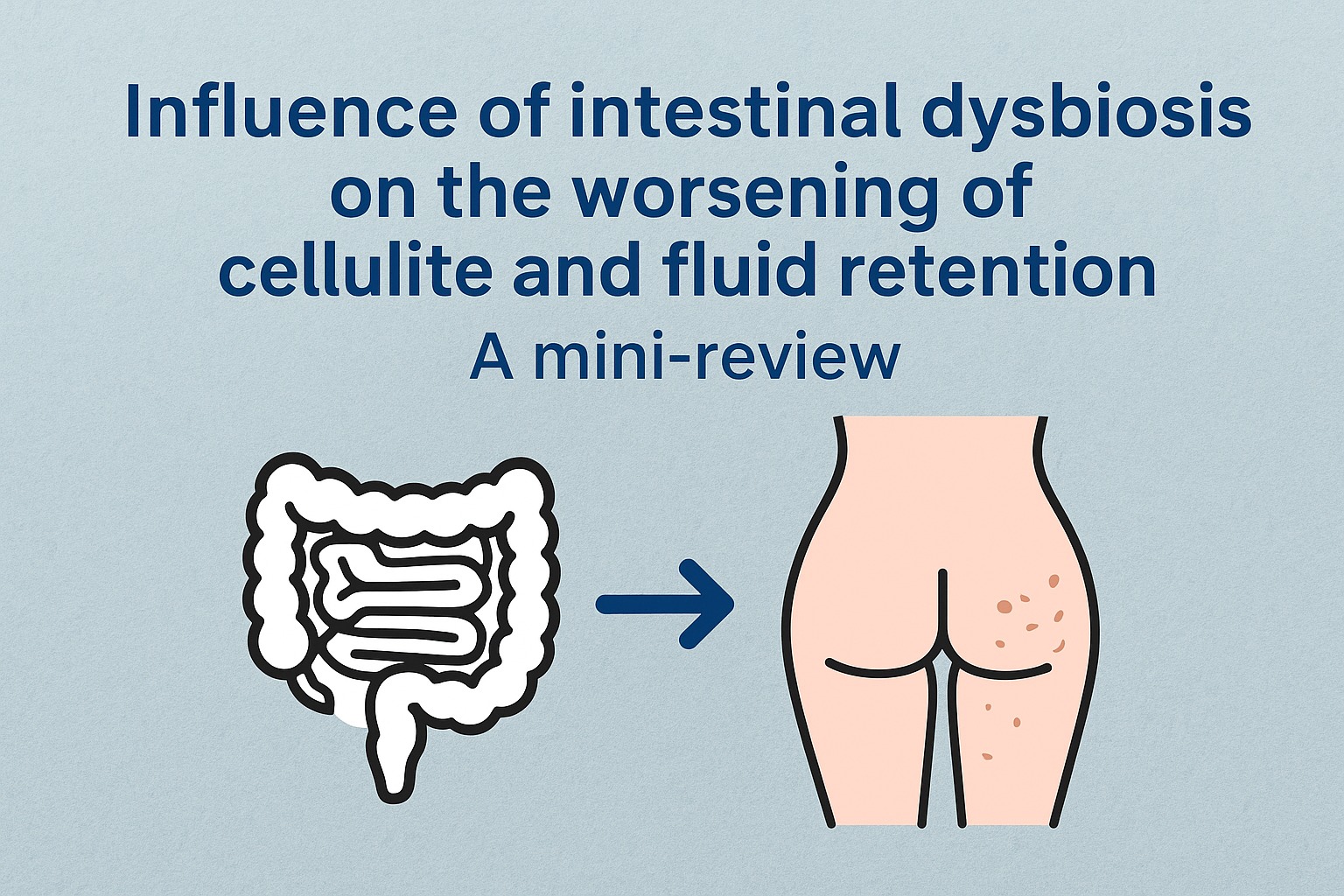
Influence of intestinal dysbiosis on the worsening of cellulite and fluid retention: A mini-review
DOI:
https://doi.org/10.14295/bjs.v5i1.814Keywords:
systemic inflammation, hormonal regulation, reduced absorptionAbstract
Intestinal dysbiosis is characterized by a change in the diversity and abundance of microbial species, which can impair the normal functions of the gastrointestinal tract, directly affecting health. These alterations have been associated with some pathologies, such as cellulite and fluid retention. Thus, the objective of this study is to understand the influence of intestinal dysbiosis on the worsening of cellulite and fluid retention, discussing the possible pathophysiological mechanisms involved and the clinical implications of this interaction. To this end, a descriptive study of bibliographic review and explanatory approach is undertaken. It is concluded that intestinal dysbiosis is a disorganization in the microbiota characterized by a maladjustment of bacterial colonization, and this can contribute to a worsening of cellulite and fluid retention through interconnected mechanisms, causing chronic systemic inflammation, with reduced absorption of nutrients important for hormonal regulation, potentially leading the individual to an imbalance in the body.
References
Andrade, I. F. G. A., & Gurevich, L. (2023). Relação microbiota intestinal e pele saudável: uma revisão sistemática concisa. BWS Journal, 6(11), 1-11. https://bwsjournal.emnuvens.com.br/bwsj/article/view/395
Araújo, J. M. (2020). Retenção de líquido além da estética. Available at: https://www.portalsaudenoar.com.br/tag/retencao-de-liquido/. Accessed on: October 23, 2025.
Atamoros, F. M. P., Pérez, D. A., Sigall, D. A., Romay, A. A. A., Gastelum, J. A. B., Salcedo, J. A. P., Salgado, P. E. E., Palacios, G. J. G., Guerrero-Gonzalez, G. A., Cerda, R. M., Olivera, R. M. P., Soriano, F. R., Tinoco, E. S., & Hernández, E. C. W. (2018). Tratamento baseado em evidências para lipodistrofia ginóide: uma revisão da literatura recente. Revista de Dermatologia Cosmética, 17(6), 977-983. DOI: https://doi.org/10.1111/jocd.12555
Bistafa, R. (2022). Probióticos: seus efeitos biológicos e regulatórios. Monografia (Bacharel em Ciências Biológicas), pela Universidade Presbiteriana Mackenzie, São Paulo, Brasil, 36 p.
Brasil. (2022). Ministério da Saúde. Mais alimentos in natura, menos retenção de líquido. Brasília: Ministério da Saúde.
Bruna, M. H. V. (2023). Retenção de líquidos. Available at: https://drauziovarella.uol.com.br/doencas-e-sintomas/retencao-de-liquidos. Accessed on: October 20, 2025.
Buttó, L. F., & Haller, D. (2016). Dybiosis in intestinal inflammation: Cuse or consequence. International Journal of Medical Microbiology, 306(5), 302-309. https://doi.org/10.1016/j.ijmm.2016.02.010 DOI: https://doi.org/10.1016/j.ijmm.2016.02.010
Chuluck, J. B. G., Martinussi, G. O. G., De Freitas, D. M., Guaraná, L. D., Xavier, M. E. D., Guimarães, A. C. C. M., Bohnenberger, G., De Lima, M. P. G., & Zanoni, R. D. (2023). A influência da microbiota intestinal na saúde humana: uma revisão de literatura. Brazilian Journal of Health Review, 6(4), 16308-16322. DOI: https://doi.org/10.34119/bjhrv6n4-180
Cortez, D. (2022). O que é retenção de líquido? Conheça as principais causas e como aliviar. Revista Viva Bem. Available at: https://vivabem.uol.com.br/faq/o-que-e-retencao-de-liquido-saiba-principais-causas-e-como-aliviar.htm?cmpid=copiaecola. Accessed on: October 20, 2025.
Dias, M. S., Silva, L. C. C., Gonzaga, F. M. G., & Strixino, F. F. (2023). Drenagem linfática e fototerapia no tratamento de celulite: um estudo de caso. In: XXVII Encontro Latino-Americano de Iniciação Científica, XIII Encontro de Iniciação à Docência - Universidade do Vale do Paraíba.
Di Tommaso, N., Gasbarrini, A., & Ponziani, F. R. (2021). Intestinal barrier in human health and disease. International Journal of Environmental Research Public Health, 18(23). https://doi.org/10.3390/ijerph182312836 DOI: https://doi.org/10.3390/ijerph182312836
Eber, A. E., Hooper, P. B., Labadie, J. G., Kandula, P., Dover, J., & Kaminer, M. S. (2024). Cellulite management update. Advances in Cosmetic Surgery, 6(1), 177-192. https://doi.org/10.1016/j.yacs.2023.01.005 DOI: https://doi.org/10.1016/j.yacs.2023.01.005
Ellervik, C. (2021). Perspectiva sobre celulite. Dermatologia e Doenças Dermatológicas, 8(6), 307.
França, I. C., Akatsuka, E. W., Leal, C. P., Figueiredo, M. R., Oliveira, L. A., & Andrade, N. S. (2016). Eficácia da técnica de massagem modeladora para redução de adiposidades e do fibroedema gelóide. Atas de Ciências da Saúde, 4(2), 23-30.
Gamwell, K. L., Peugh, J. L., Santucci, N., Graham, K., & Hommel, K. A. (2025). Self-management and treatment adherence in pediatric irritable bowel syndrome (IBS): A longitudinal study. Journal of Psychosomatic Research, 198, 112396. https://doi.org/10.1016/j.jpsychores.2025.112396 DOI: https://doi.org/10.1016/j.jpsychores.2025.112396
Gandra, A. L., Flausino, B. G., Martins, B. X. B., Sousa, D. C. R., Dolabela, D. C. F., Duarte, E. M. P.; De Oliveira, M. C. (2021). Importância da microbiota intestinal e sua modulação para o emagrecimento saudável. Revista Ibero-Americana de Humanidades, Ciências e Educação, 7(8). DOI: https://doi.org/10.51891/rease.v7i8.1981
Gil, A. C. (2012). Métodos e técnicas de pesquisa social. São Paulo: Editora Atlas.
Gomes, N. L. P., Paes, G. T., Silva, V. C. A., Bastos, J. M., Maia, M. A. S. Q., Diniz, I. G., & Guimarães, M. C. M. (2024). A disbiose intestinal e seu impacto no processo de emagrecimento: uma revisão integrativa de literatura. Research, Society and Development, 13(1). DOI: https://doi.org/10.33448/rsd-v13i1.44763
Hernandes, A. S., Santos, G. F., & Vila, M. M. D. (2022). Celulite: uma breve revisão. Revista Brasileira de Desenvolvimento, 8(1), 4201-4212. DOI: https://doi.org/10.34117/bjdv8n1-277
Khalil, S., & Galadari, H. I. (2024). Cellulite: An update on pathogenesis and management. Dermatologic Clinics, 42(1), 129-137. https://doi.org/10.1016/j.det.2023.06.008 DOI: https://doi.org/10.1016/j.det.2023.06.008
Liu, Z., Wang, M., Li, J., Liang, Y., Jiang, K., Hu, Y., Gong, W., Guo, X., Guo, Q., & Zhu, B. (2024). Hizikia fusiforme polysaccharides synergized with fecal microbiota transplantation to alleviate gut microbiota dysbiosis and intestinal inflammation. International Journal of Biological Macromolecules, 283(4), 137851. https://doi.org/10.1016/j.ijbiomac.2024.137851 DOI: https://doi.org/10.1016/j.ijbiomac.2024.137851
Lösch, S., Rambo, C. A., & Ferreira, J. L. (2023). A pesquisa exploratória na abordagem qualitativa em educação. Revista Ibero-Americana de Estudos em Educação, 18(01). DOI: https://doi.org/10.21723/riaee.v18i00.17958
Mauro, D., Cai, B., Ciancio, A., Forte, G., Gandolfo, S., Thomas, R., Bergot, A-S., & Ciccia, F. (2025). The role of the gut and intestinal dysbiosis in the pathogenesis of spondylarthritis. Joint Bone Spine, 92(6), 105923. https://doi.org/10.1016/j.jbspin.2025.105923 DOI: https://doi.org/10.1016/j.jbspin.2025.105923
Mecalser, J. O. A., Moraes, G. S. M., Barros, F. E., Lucena, A. J., Bezerra, M., A.; Souza, F. R., Silva, W. T., Anjos, C. V. O., & Costa, W. K. (2025). O papel da microbiota intestinal na regulação fisiológica humana. Revista Eletrônica da Estácio Recife, 11(2).
Nesi, G. A., Franco, M. R., & Capel, L. M. M. (2020). A disbiose da microbiota intestinal, sua associação no desenvolvimento de doenças neurodegenerativas e seus possíveis tratamentos. Brazilian Journal of Development, 6(8). DOI: https://doi.org/10.34117/bjdv6n8-677
Oliveira, S. B.; Carvalho, D. A.; Luasse, M. A. L.; Medeiros, T. F.; Santos, M. O. (2020). História da disbiose. In: Santos, M. O., Delevedove, A. A. M. (Org.) Disbiose: características e atualizações. Goiânia: SBCSaúde.
Pacheco, A. M., & Soares, C. Q. G. (2021). Obesidade: disbiose associada a doenças metabólicas. Revista Científica UNIFAGOC, 7(2).
Pantoja, C. L., Costa, A. C. C., Costa, P. L. S., Andrade, M. A. H., Silva, V. V., Brito, A. P. S. O., & Garcia, H. C. R. (2019). Diagnóstico e tratamento da disbiose: Revisão Sistemática. Revista Eletrônica Acervo Saúde, 32, 3-7. DOI: https://doi.org/10.25248/reas.e1368.2019
Pereira, L. S. A., Moraes, G. S. P., Barros, F. E. B. C., Alves, L. J., Bezerra, M. A., Souza, R., & Costa, K. (2024). O impacto da disbiose intestinal na saúde metabólica e imunológica. Revista Eletrônica da Estácio Recife, 11(2).
Pinto, T. B., Silva, D. A., & Sobrinho, H. M. R. (2019). Tratamento estético do fibro edema gelóide: uma revisão da literatura. Revista Científica da Faculdade de Educação e Meio Ambiente, 10(2), 120-139. DOI: https://doi.org/10.31072/rcf.v10i2.817
Quaresma, E. B., Lima, J. R., Oliveira, L. M., Freitas, F. M. N. O., Ferreira, J. C. S. (2022). Disbiose: a contribuição da nutrição funcional no equilíbrio do trato-gastrointestinal. Ciências Biológicas, Ciências da Saúde, 26(116).
Queiroz, A. M. O., Santos, D. M. O., Andrade, D. A. M., Procópio, A. G., Vasconcelos, D. B., & Vidal, G. P. (2019). Lipodistrofia ginóide: tratamento nutricional e fisioterápico. Temas em Saúde, 19(2), 321-339.
Rocha, M. E. S. S., Bortotto, G. P., & Moura, R. Z. S. (2025). A relação da disbiose intestinal com problemas cardiometabólicos. Revista Foco, 18(3). DOI: https://doi.org/10.54751/revistafoco.v18n3-102
Santos, B. P. S., & Aguiar, L. L. (2024). Disbiose e metabolismo. Revista Contemporânea, 4(10). DOI: https://doi.org/10.56083/RCV4N10-108
Santos, V. S. (2025). Edema. Available at: https://brasilescola.uol.com.br/o-que-e/biologia/o-que-e-edema.htm. Accessed on: October 16, 2025.
Schotten, A. Técnicas de leitura. (2024). Available at: https://methodus.com.br/leitura-dinamica-e-memorizacao. Accessed on: September 30, 2025.
Seguin, L., Dufour, X., & Carsuzaa, F. (2024). Une cellulite cervicale inhabituelle. Annales Françaises d’Oto-rhino-laryngologie et de Pathologie Cervico-faciale, 141(5), 305-306. https://doi.org/10.1016/j.aforl.2024.04.005 DOI: https://doi.org/10.1016/j.aforl.2024.04.005
Sharma, V., Prateeksha, P., Paliya, B., Gupta, S., Singh, S., Anunay, A., Agrahari, S., Singh, S., Rao, C., Barik, S., & Singh, B. (2025). Engineered an ultrasmall curcumin oral nanoformulation restores intestinal integrity and but microbiota dysbiosis. Materials Today Bio, 102548. https://doi.org/10.1016/j.mtbio.2025.102548 DOI: https://doi.org/10.1016/j.mtbio.2025.102548
Silva Junior, L. P., Rovai, R. B., Rezende, J. J., Mercês, B. J., Ferreira, C. B., Silva, T., & Masquio, D. C. L. (2022). Microbiota intestinal e síndrome metabólica: utilização terapêutica de probióticos. Revista da Associação Brasileira de Nutrição, 13(1), 1-24. DOI: https://doi.org/10.47320/rasbran.2022.1451
Silva, C. A., Araújo, D. F., Fontes, S. L. F., Assis, L. C., Claudino, F. C. A. M., & Delevedove, A. A. M. D. (2020). Fatores que propiciam o desenvolvimento da disbiose. In: Santos, M. O., Delevedove, A. A. M. (Org.) Disbiose: Características e Atualizações. Goiânia, Goiás: SBCSaúde.
Silva, C. P. W., Cruz, N. S., Sousa, V. C., Freitas, F. M. N. O., & Lobo, R. H. (2024). A disbiose intestinal como fator de risco na alteração psicológica depressiva intestinal. Brazilian Journal of Health Review, 7(2), 01-15. DOI: https://doi.org/10.34119/bjhrv7n2-008
Sinha, S. R., Haileselassie, Y., Nguyen, L., Tropini, C., Wang, M., Becker, L. S., Sim, D., Jarr, K., Spear, E. T., Singh, G., Namkoong, H., Bittinger, K., Fischbach, M. A., Sonnenburg, J. L., & Habtezion, A. (2020). Dysbiosis-induced secondary bile acid deficiency promotes intestinal inflammation. Cell Host Microbe, 27(4), 659-670. https://doi.org/10.1016/j.chom.2020.01.021 DOI: https://doi.org/10.1016/j.chom.2020.01.021
Souza, F. C., Souza, F. B., Sarmento, J. L., & Bindá, L. C. (2022). Interferência do uso de antibióticos na microbiota intestinal. Brazilian Journal of Development, 8(4), 28760-28773. DOI: https://doi.org/10.34117/bjdv8n4-392
Suriani, T. R., Carvalho, D. A., Souza, G. M., & Santos, M. O. (2020). Como a disbiose causa doenças. In: Santos, M. O., Delevedove, A. A. M. (Org.) Disbiose: características e atualizações. Goiânia, Goiás: SBCSaúde.
Ullah, H., Ali, M., Ma, R., Alioui, Y., Ali, S., Ilyas, M., Rahman, M. U., Farooqui, N. A., Siddiqui, N. Z., Xin, Y., & Wang, L. (2024). Polysaccharides derived from deglet noor dates modulate amoxicillin-induced dysbiosis and enhance intestinal barrier function. Journal of Functional Foods, 120, 106350. https://doi.org/10.1016/j.jff.2024.106350 DOI: https://doi.org/10.1016/j.jff.2024.106350
Vieira, G. C. (2020). Aspectos fisiopatológicos da disbiose intestinal em estudantes de uma instituição de ensino privada do Distrito Federal. Monografia (Graduação em Biomedicina) pela Faculdade de Educação e Ciências da Saúde, Centro Universitário de Brasília, Brasília, Brasil. DOI: https://doi.org/10.25248/reas.e5249.2021
Vilela, V. F. C., Lima, G. V. D. A., Saavedra, K. M. B., & Matta, S. M. (2025). Disbiose gastrointestinal na fisiopatologia e evolução de doenças digestivas funcionais: uma revisão dos mecanismos moleculares e fatores prognósticos. Revista Ibero-Americana de Humanidades, Ciências e Educação, 11(4), 1461-1468. DOI: https://doi.org/10.51891/rease.v11i4.18751
You, Y., Lu, H., Wang, Y., Wang, B., Chen, Q., & Shi, Y. (2025). Probiotic encapsulation strategies for controlled intestinal delivery and microbiome dysbiosis therapy. Journal of Controlled Release, 387, 114254. https://doi.org/10.1016/j.jconrel.2025.114252 DOI: https://doi.org/10.1016/j.jconrel.2025.114252
Zhao, Y., Wang, B., Wei, X., Liu, D., Wang, R., Xie, S., Qiao, Z., Cui, D., Hou, S., & Zhang, H. (2025). Impact of gut microbiota dysbiosis on intestinal barrier integrity and systemic inflammation in a pre-eclampsia mouse model. Microbial Pathogenesis, 209, 108053. https://doi.org/10.1016/j.micpath.2025.108053 DOI: https://doi.org/10.1016/j.micpath.2025.108053
Zalaquett, L. L., Nascimento, V. N., Picoli, M. L. F., & Oliveira, M. L. (2025). Disbiose intestinal e inflamação: implicação para a obesidade e metabolismo energético intestinal. Revista Eletrônica Acervo Saúde, 25(5). DOI: https://doi.org/10.25248/reas.e19525.2025
Wang, Y., Tian, L., Fabi, J. P., & de Vos, P. (2025). The potential of prebiotics, probiotics, and symbiotics for ameliorating intestinal barrier dysfunction and modulating inflammatory responses as dietary supplements in diabetes mellitus management. Food Bioscience, 72, 107539. https://doi.org/10.1016/j.fbio.2025.107539 DOI: https://doi.org/10.1016/j.fbio.2025.107539
Wu, Y., Li, Y., Zheng, Q., & Li, L. (2024). The efficacy of probiotics, prebiotics, synbiotics, and fecal microbiota transplantation in irritable Bowel syndrome: A systematic review and network meta-analysis. Nutrients, 16(13), 2114. https://doi.org/10.3390/nu16132114 DOI: https://doi.org/10.3390/nu16132114
Downloads
Published
How to Cite
Issue
Section
License
Copyright (c) 2026 Rafaela Cintia dos Santos Silva, Jacqueline Silva Guimarães Santos

This work is licensed under a Creative Commons Attribution 4.0 International License.
Authors who publish with this journal agree to the following terms:
1) Authors retain copyright and grant the journal right of first publication with the work simultaneously licensed under a Creative Commons Attribution License that allows others to share the work with an acknowledgement of the work's authorship and initial publication in this journal.
2) Authors are able to enter into separate, additional contractual arrangements for the non-exclusive distribution of the journal's published version of the work (e.g., post it to an institutional repository or publish it in a book), with an acknowledgement of its initial publication in this journal.
3) Authors are permitted and encouraged to post their work online (e.g., in institutional repositories or on their website) prior to and during the submission process, as it can lead to productive exchanges, as well as earlier and greater citation of published work.