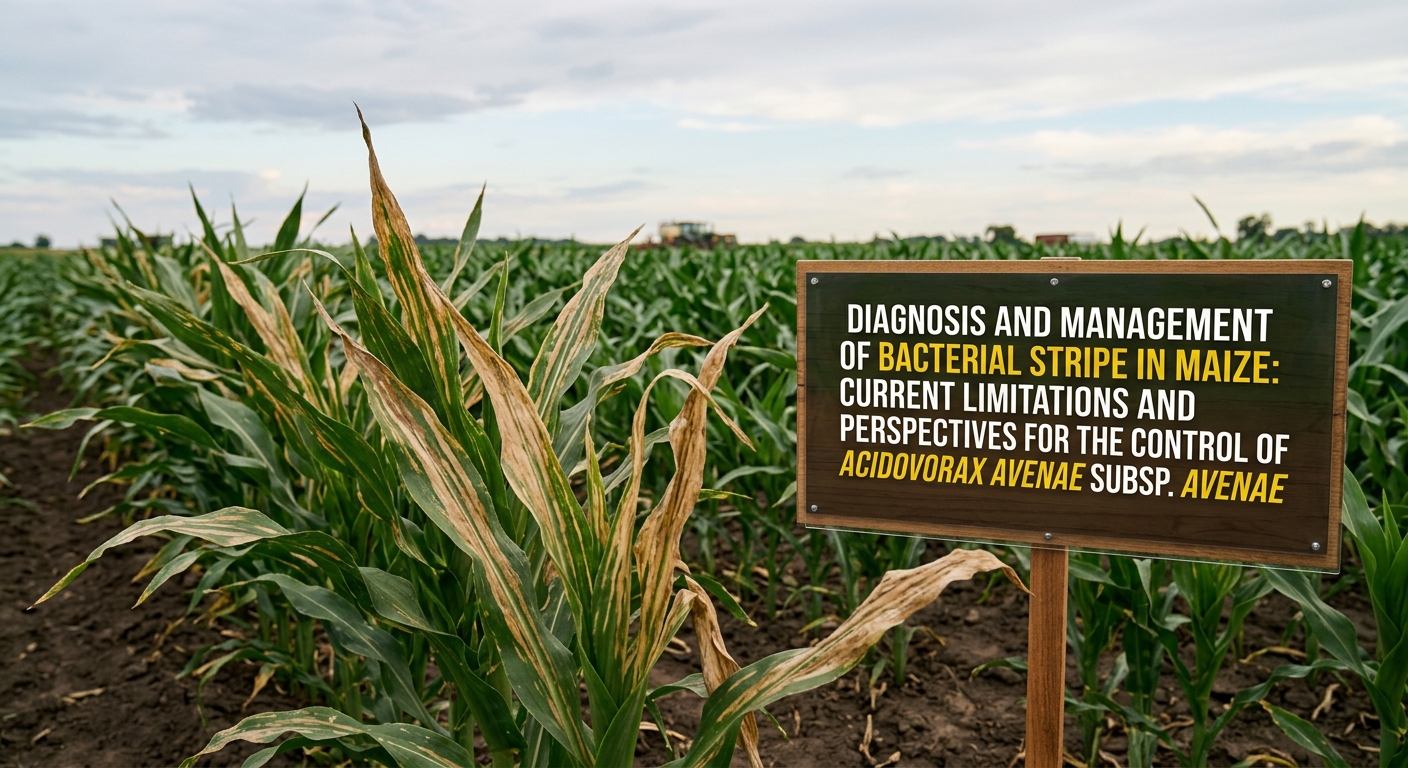
Diagnosis and management of bacterial stripe in maize: Current limitations and perspectives for the control of Acidovorax avenae subsp. avenae
DOI:
https://doi.org/10.14295/cerrado.v3i3.942Keywords:
Bacterial stripe, Maize pathology, Molecular diagnosis, Integrated disease management, Plant-pathogenic bacteriaAbstract
Maize (Zea mays L.) is one of the most important cereal crops worldwide, playing a fundamental role in food security, animal nutrition, and industrial production. Among the bacterial diseases affecting maize, bacterial stripe caused by Acidovorax avenae subsp. avenae has emerged as a significant phytosanitary concern due to its wide host range, seedborne nature, and capacity to survive in crop residues and alternative hosts. This review aimed to synthesize current knowledge regarding the biology, epidemiology, symptomatology, diagnosis, and management of A. avenae subsp. avenae, highlighting existing limitations and future perspectives for disease control. A narrative literature review was conducted using scientific publications indexed in national and international databases, with emphasis on studies published between 2020 and 2026. The pathogen causes characteristic water-soaked lesions that develop into elongated chlorotic and necrotic stripes, leading to reductions in photosynthetic capacity and crop performance. Recent advances in molecular diagnostics, including polymerase chain reaction (PCR), quantitative PCR (qPCR), sequencing technologies, and genomic approaches, have improved pathogen detection and epidemiological investigations. However, disease management remains challenging due to the limited availability of resistant cultivars and the inconsistent efficacy of chemical and biological control measures. Integrated disease management, combining cultural practices, pathogen-free seeds, biological control agents, host resistance, and disease monitoring, currently represents the most effective strategy. Emerging technologies such as remote sensing, artificial intelligence, precision agriculture, and gene-editing tools offer promising opportunities for improving disease detection, surveillance, and control. Future research should focus on pathogen diversity, host–pathogen interactions, resistance mechanisms, and climate change effects to support the development of sustainable management strategies for bacterial stripe in maize production systems.
References
Bertani, R. P., Mielnichuk, N., Chaves, S., Yaryura, P. M., Joya, C. M., Monachesi, M. A., & Vojnov, A. A. Comparative study of virulence factors, pathogenicity and genetic diversity of Acidovorax avenae subsp. avenae, the causal agent of red stripe disease in sugarcane. Plant Pathology, 73(2), 250-261, 2024. https://doi.org/10.1111/ppa.13814
Hernández-Juárez, C., Silva-Rojas, H. V., De León-García de Alba, C., Hernández-Juárez, E., Osnaya, M., Valdovinos-Ponce, G., Nava, G. M., & Aranda-Ocampo, S. Molecular identification, incidence, and distribution of Acidovorax avenae in the sugarcane-producing agroecological regions of Mexico. Sugar Tech, 23(3), 891-899, 2021. https://doi.org/10.1007/s12355-021-00964-w
Jariwala, R. Acidovorax. In: Compendium of Phytopathogenic Microbes in Agro-Ecology, Chapter, 3-17, 2025. https://doi.org/10.1007/978-3-031-81999-5_1
Lee, J., Kim, S., Jung, H., Koo, B-K., Han, J. A., & Lee, H-S. Exploiting bacterial genera as biocontrol agents: Mechanisms, interactions and applications in sustainable agriculture. Journal of Plant Biology, 66, 485-498, 2023. https://doi.org/10.1007/s12374-023-09404-6
Li, B., Ibrahim, M., Ge, M., Cui, Z., Sun, G., Xu, F., & Kube, M. Transcriptome analysis of Acidovorax avenae subsp. avenae cultivated in vivo and co-culture with Burkholderia seminalis. Scientific Reports, 4, 2014. https://doi.org/10.1038/srep05698
Mall, A., Kabra, S., Lhila, A., & Ajmera, P. AMaizeD: An end to end pipeline for automatic maize disease detection. Computer Vision and Pattern Recognition, 6, 2023. https://doi.org/10.48550/arXiv.2308.03766
Masum, M. M. I., Yang, Y., Li, B., Olaitan, O. S., Chen, J., Zhang, Y., Fang, Y., Qiu, W., Wang, Y., & Sun, G. Role of the genes of types VI secretion system in virulence of rice bacterial brown stripe pathogen Acidovorax avenae subsp. avenae strain RS-2. International Journal of Molecular Sciences, 18(10), 2024, 2017. https://doi.org/10.3390/ijms18102024
Monachesi, M. A., Bertani, R. P., & González, V. Evaluation of strategies for the integrated management of red stripe disease in sugarcane. In: ISSCT Workshop Proceedings. International Society of Sugar Cane Technologists (ISSCT), Consejo Nacional de Investigaciones Científicas y Técnicas, 2024.
Nakamura, M., Kondo, M., Suzuki, A., Hirai, H., & Che, F. S. Novel effector RHIFs identified from Acidovorax avenae strains N1141 and K1 play different roles in host and non-host plants. Frontiers in Plant Science, 12, 716738, 2021. https://doi.org/10.3389/fpls.2021.716738
Netsu, O., Komatsu, K., Yoshimura, T., Takikawa, Y., Matsuda, K., & Tanaka, A. First report of brown stripe on perennial ryegrass (Lolium perenne L.) caused by Acidovorax avenae. Journal of General Plant Pathology, 88, 399-404, 2022. https://doi.org/10.1007/s10327-022-01093-2
Ogonkov, A., Brosius, P. E., Zeng, Q., Sasso, S., & Nagel, R. Not all Acidovorax are created equal: Gibberellin biosynthesis in the turfgrass pathogen Acidovorax avenae subsp. avenae. Molecular Plant-Microbe Interactions, 36(10), 2023. https://doi.org/10.1094/MPMI-02-23-0017-R
Osdaghi, E. Acidovorax avenae (bacterial leaf blight of grasses). CABI Compendium, 2023. https://doi.org/10.1079/cabicompendium.44935
Resmi, A. R., & Kanhirala, H. Chapter 2. In: Plant diseases: Causes and symptoms. Plant Pathology and Plant Diseases, 16 p, 2024.
Rother, E. T. Revisão sistemática X revisão narrativa. Acta Paulista de Enfermagem, 20(2), 2007. https://doi.org/10.1590/S0103-21002007000200001
Sawada, H., Shinohara, H., Takashima, Y., Naito, K., & Satou, M. Acidovorax sacchari sp. nov., a pathogen causing red stripe of sugarcane in Japan. International Journal of Systematic and Evolutionary Microbiology, 75(2), 2025. https://doi.org/10.1099/ijsem.0.006575
Somda, I., Veena, M. S., & Mortensen, C. N. First report on the occurrence of bacterial stripe organism Acidovorax avenae subsp. avenae in rice seeds from Burkina Faso. Plant Disease, 85(7), 804, 2001. https://doi.org/10.1094/pdis.2001.85.7.804a
Torres, A. G. Manejo de doenças bacterianas e de nematoides na cultura da cana-de-açúcar (Saccharum spp.). Doctoral Thesis, ESALQ/USP, 2024.
Verma, N. V., Shukla, M., Kulkarni, R., Srivastava, K., Claudic, B., Savara, J., Mathew, M. J., Maruya, R., Bhattacharjee, G., Singh, V., & Pandya, A. Emerging extraction and diagnostic tools for detection of plant pathogens: Recent trends, challenges, and future scope. ACS Agricultural Science & Technology, 2(5), 858-881, 2022. https://doi.org/10.1021/acsagscitech.2c00150
Zhang, Y., Wei, Z., Zhang, J., Chen, C., & Liu, F. Application of PCR and PCR-derived technologies for the detection of pathogens infecting crops. Physiological and Molecular Plant Pathology, 136, 102589, 2005. https://doi.org/10.1016/j.pmpp.2025.102589
Zhang, M., Shi, Z., Chen, G., Cao, A., Wang, Q., Yan, D., Fang, W., & Li, Y. Detection and identification methods and control techniques for crop seed diseases. Agriculture, 13(9), 1786, 2023. https://doi.org/10.3390/agriculture13091786
Zhao, J-Y., Chen, J., Hu, Z-T., Li, J., Fu, H-Y., Rott, P. C., & Gao, S-J. Genetic and morphological variants of Acidovorax avenae subsp. avenae cause red stripe of sugarcane in China. Frontiers in Plant Science, 14, 2023. https://doi.org/10.3389/fpls.2023.1127928
Zytynska, S. E., Eicher, M., Rothballer, M., & Weisser, W. W. Microbial-mediated plant growth promotion and pest suppression vary under climate change. Frontiers in Plant Science, 11, 573578, 2020. https://doi.org/10.3389/fpls.2020.573578
Wani, S. H., Samantara, K., Razzaq, A., Kakani, G., & Kumar, P. Back to the wild: mining maize (Zea mays L.) disease resistance using advanced breeding tools. Molecular Biology Reports, 49, 5787-5803, 2022. https://doi.org/10.1007/s11033-021-06815-x
Wang, G., & Zhang, X. Maize in global food security: Role and challenges. Field Crop, 7(3), 2024.
Downloads
Published
How to Cite
Issue
Section
License
Copyright (c) 2026 Eduardo Siqueira Castro Leão, João Pedro Almeida Lima, Marcos Levi Costa Barbosa, Lucas Rezende Dutra, Osório Leão Santa Cruz Filho, Vitor Martins Andrade, Talisson José Medeiros da Silva, Porshia Sharma, Carlos Frederico de Souza Castro, Aurélio Ferreira Melo, Hellen Regina Fernandes Batista Ventura, Pedro Henrique Azevedo Garcia

This work is licensed under a Creative Commons Attribution 4.0 International License.
Authors who publish with this journal agree to the following terms:
1) Authors retain copyright and grant the journal right of first publication with the work simultaneously licensed under a Creative Commons Attribution License that allows others to share the work with an acknowledgement of the work's authorship and initial publication in this journal.
2) Authors are able to enter into separate, additional contractual arrangements for the non-exclusive distribution of the journal's published version of the work (e.g., post it to an institutional repository or publish it in a book), with an acknowledgement of its initial publication in this journal.
3) Authors are permitted and encouraged to post their work online (e.g., in institutional repositories or on their website) prior to and during the submission process, as it can lead to productive exchanges, as well as earlier and greater citation of published work.